

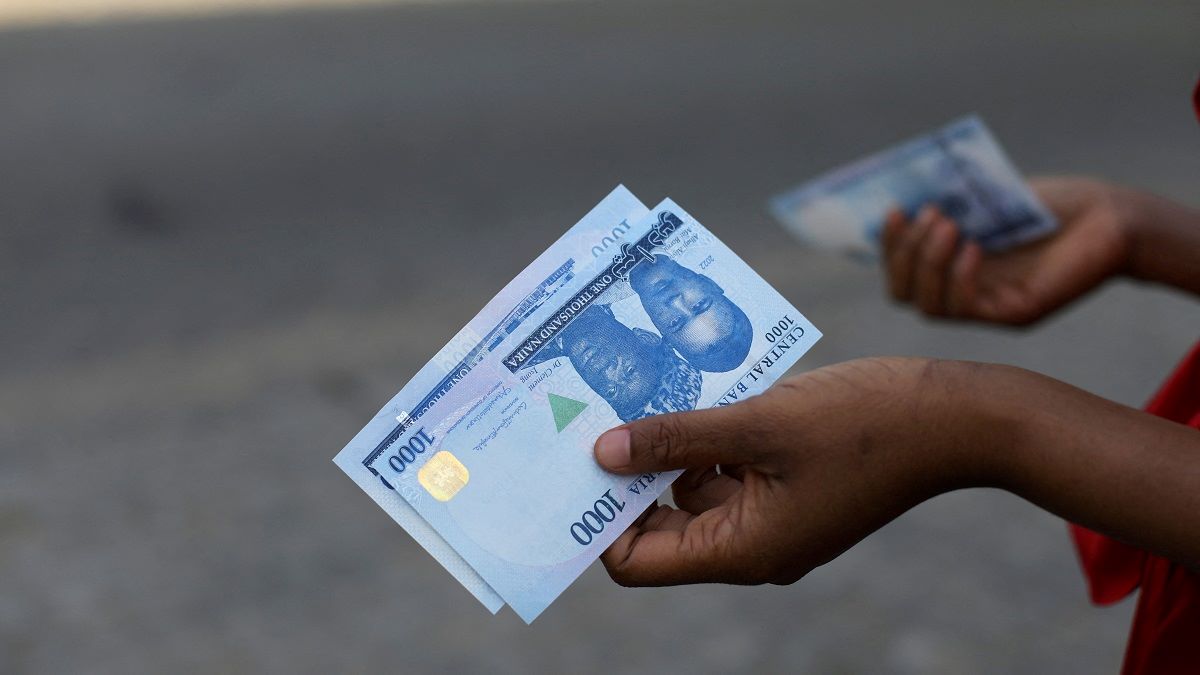
Naira Falls to N1,501 as Foreign Payments Rise to $5.63bn
The naira lost N26 on each US dollar to settle at N1,501.61 in the foreign exchange (FX) market due to demand pressures. The market US dollar liquidity shortfall extended throughout the previous, which triggered Central Bank (CBN) intervention in the official window.
On the other hand, the naira gained in the informal currency market as the CBN extended temporary FX sales to Bureau de Change (BDCs) operators. The reduced demand pressures in the parallel market as both banks and BDCs continue to attend to personal, and business traveling allowance.
To keep spread on US dollar tight, the authority also capped margin for BDCs while regulation remains tightened. According to data from the FMDQ platform, the Naira lost ₦26.83 to close at $/₦1,501.61 in the official market, while it gained ₦45.00 to close at ₦1,565.00 in the parallel market.
Consequently, the spread between the two markets narrowed to 4.22% from 9.17% the previous week, TrustBanc Financial Group Limited said in a report. Last week, the CBN intervened in the FX market, offering $32.30 million within the range of $/₦1,495.50 to $/₦1,502.50. This brought the weekly FX sales to banks to $60.3 million, according to Cordros Capital Limited.
External reserves declined to $39.50bn, while Brent crude oil prices traded lower at $74.29 per barrel. According to the Central Bank of Nigeria (CBN), international payments facilitated by the apex bank marginally increased by 2.7% y/y to USD5.63 billion in 9M-2024 from USD5.48 billion in the equivalent period in 2023.
Analysts attribute the increase to the significant rise in foreign debt service payments, which accounted for 63.6% of the total international payments and grew by 39.8% year on year to USD3.58 billion from USD2.56 billion in 12 months.
This was primarily due to repayments of matured multilateral and bilateral loans, Cordros Capital Limited told investors. However, payments for letters of credit declined by 52.5% y/y to USD506.06 million from USD1.07 billion at the end of third quarter of 2024 partly reflecting lower imports amid weaker consumer demand.
Similarly, direct remittances declined by 16.7% year on year to USD1.55 billion from USD1.86 billion due to decreased payments for international services by Nigerian residents. Looking ahead, analysts at Cordros Capital Limited said they expect international payments to remain elevated, primarily due to FG’s debt repayment and servicing obligations.
Subsequently, as foreign exchange liquidity improves and consumer demand strengthens over the medium term, analysts expect to see a gradual rise in imports of goods and services, which will in turn cause increases in payments of letters of credit and direct remittances.
#Naira Falls to N1,501 as Foreign Payments Rise to $5.63bn Edun Highlights Nigeria’s Leadership in Africa’s Energy Transition
