

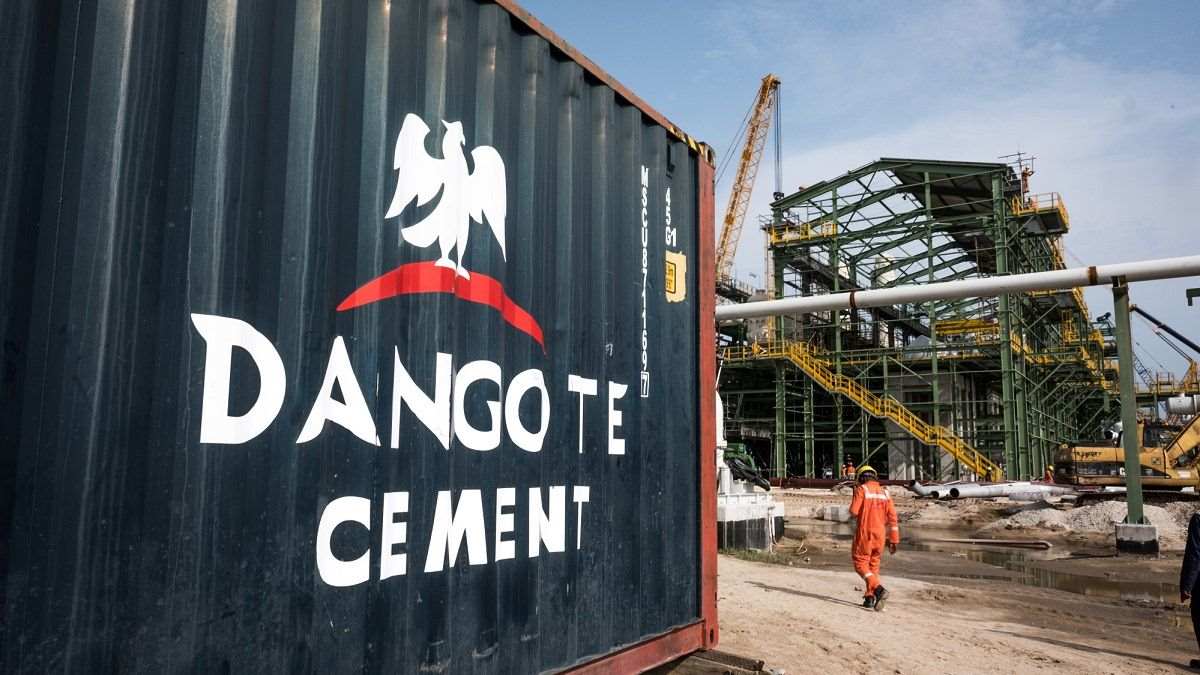
Dangote Cement Seeks to Raise N50bn from Debt Market
Dangote Cement Plc seeks to raise about N50 billion from the local debt capital market to support its working capital demand. The cement is in the market to raise the amount by offering series 17 & 18 commercial paper under its N300 billion issuance programme.
Breakdown shows that Dangote seeks to raise 180-day commercial paper under Series 17 at a discount rate of 24.9886%. This translates to a 28.5001% implied yield for investors.
Its Series 18 commercial paper has 270-day tenor at a discount rate of 24.5521%, with a 30% implied yield. MarketForces Africa gathered that the offer has been opened to interested investors and it is scheduled to close on Thursday, 19 December 2024.
Sub-Saharan Africa’s leading cement producer has a combined capacity of 52 Mta across its operations in 10 African countries. With 35.3 Mta in Nigeria, bulk of the cement company’s production capacity are in the local economy.
In July, GCR Ratings affirmed the national scale long-term and short-term issuer ratings of AA+(NG) and A1+(NG), respectively, accorded to Dangote Cement Plc (DCP or the company).
Concurrently, GCR affirmed the national scale long-term issue rating of AA+(NG) accorded to each of Dangote Cement Plc’s existing Senior Unsecured Bonds.
The rating of N3.6 billion Series 1 Tranche A Senior Unsecured Bond which was fully redeemed in May 2024 was withdrawn. The outlook on the ratings is stable.
GCR said Dangote Cement ratings was affirmed on the back of sustained competitive advantages and market leadership, which have translated to strong earnings and cash generation.
The rating agency said that these strengths are, however, balanced against the elevated short-term debt and the consequent increase in finance cost, which, combined with high dividend payouts, create further liquidity pressures.
The ratings also remain constrained by the relatively weaker credit profile of DCP’s parent company, Dangote Industries Limited. #Dangote Cement Seeks to Raise N50bn from Debt Market Nigeria’s Eurobonds Yield Sinks to 9% as Demand Heats Up
