

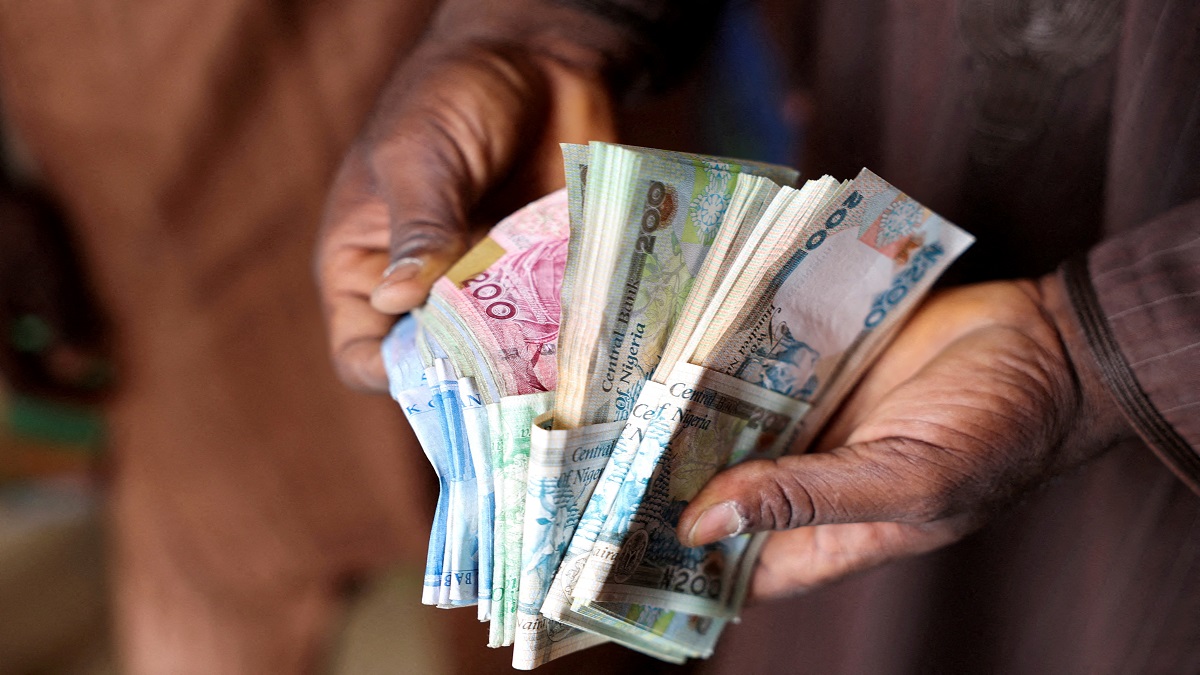
Naira Exchange Rate to Reset on Expected $10bn Fuel Imports Saving
The Nigerian naira is projected to recalibrate in the foreign exchange market on expected decline in US demand for fuel imports payment in 2024.
With the plan that Dangote Refinery would start meeting local demand in the third quarter of the year, analysts see reduced FX demand pressure.
Analysts also added that the apex bank high interest rate on Treasury, OMO bills to lure foreign investors added to improved FX inflows registered in the market.
However, they noted seasonal demand for FX have had a negative run on exchange rate at the time that International Oil Companies, IOCs, are leaving the country in numbers.
On the export side, oil-backed loans have reduced FX accretion into external reserves. Exports have contributed less to foreign reserves amidst allegation that private exporters funds rarely taken through official window.
The local currency has dropped strongly since April after successive gains streaks that lifted the naira as world’s best performer. “For the exchange rate, forex liquidity remains the headwinds”, analysts said in a discussion about the outlook for the local currency.
A BMI said in its country risk report that Nigeria’s import-driven US dollar demand will moderate in the year, an expectation anchored on declining FX payment for fuel imports.
Following the introduction of unorthodox policies at the Central Bank of Nigeria (CBN) and the ongoing challenges regarding the Naira, Africa’s largest economy, has experienced a waning of foreign investment interest.
The Naira has undergone a notable devaluation subsequent to the governmental transition in 2023, according to BMI report.
“It is projected that the demand for FX to finance imports will decline, as evidenced by our Oil & Gas team’s anticipation of a USD9.6 billion decrease in fuel imports for 2024.
“The expense associated with importing crude is less than the cost of importing refined oil products, resulting in a net decrease in dollar demand.
“Our Country Risk analysts project an economic resurgence for the naira. recuperating the losses incurred in 2023 by the year’s end, due to a moderation in dollar demand and an uptick in investor risk tolerance”, BMI analysts said in a report.
Additionally, it is predicted that aggregate domestic demand will see a contraction of 1.2% in 2024, as a consequence of the prevalent inflationary pressures.
“This contraction is likely to yield a diminished demand for foreign exchange to finance imports, thereby alleviating some of the fiscal strain on the Naira”.
The naira ended the week in red against the dominant US dollar in the foreign exchange market as demand and supply continue to test effectiveness of Nigeria’s willing buyer, willing seller FX policy.
In the foreign exchange market, the Naira depreciated against the US dollar by 0.17%, closing at ₦1,483.99 per unit of greenback, according to data obtained from FMDQ Securities Exchange platform.
In the NAFEM the Naira depreciated against the dollar by about 0.16% week-on-week, trading at N1485.8/$ Foreign reserves ended the week at $32.79 billion, falling by about 0.31% from the previous week’s close of $32.69 billion.
The pressure on the naira exchange rate stemmed from sustained demand surge for foreign currency, outpacing the supply side due to weak FX market intervention and offshore participation.
On the parallel market, the naira strengthened by 1.41%, ending the day at N1,465 per US dollar. Data from the official trading platform of the FMDQ Exchange, a platform that oversees the Nigerian
Cordros Capital Limited expects the forthcoming World Bank meeting, where a $2.20 billion loan facility for Nigeria is expected to be approved, with an initial partial disbursement ($750.00 million, subject to request), to offer short-term support for the naira. #Naira Exchange Rate to Reset on Expected $10bn Fuel Imports Saving
