

FX Gap Reduces to N12, Firm Sets N910 as Real Naira Value
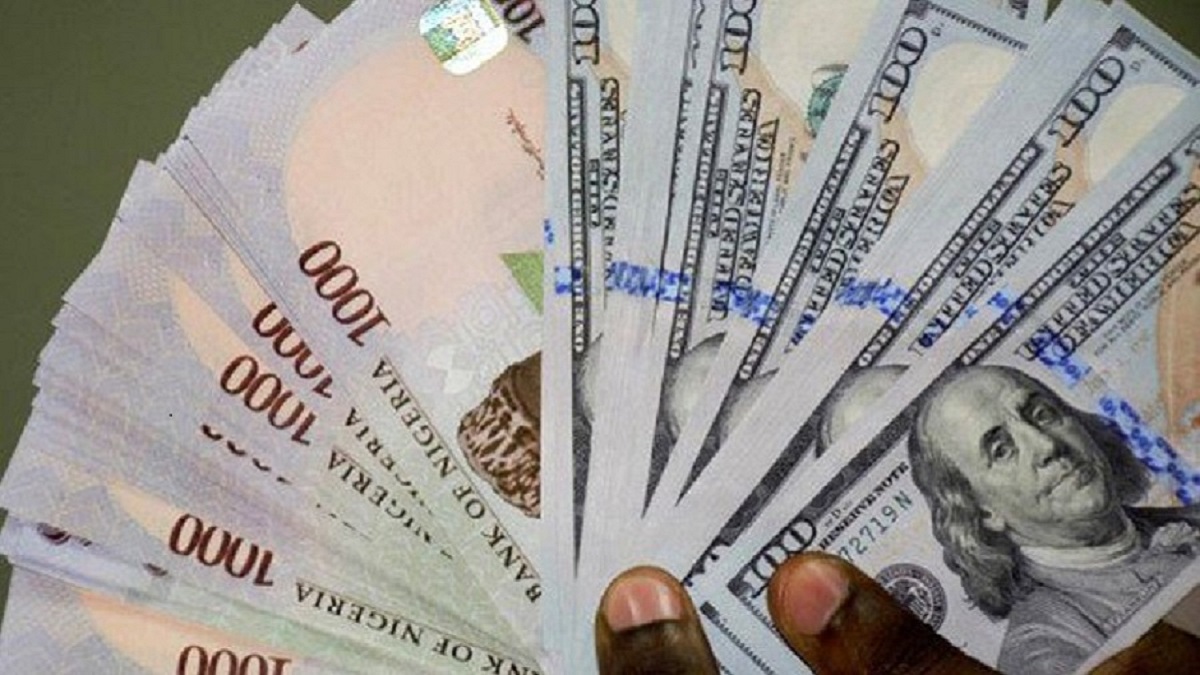
The Nigerian naira recorded market-wide gains resulting in a large drop in FX gap to N12 at the beginning of the week, data from FMDQ where daily spot rates are quoted revealed. The local currency exchange rate has been swinging both sides over elevated demand and unsteady market supply.
Rate has come under pressure after devaluation and efforts by the monetray authority to stabilise exchange rates across forex market has not deliver results. Hovering above N1600, current exchange rate has damaged some companies balance sheets.
Depoit Money Banks (DMBs) with foreign currency expsoures are groaning and manufacturers are scaling back on productive activities. On Monday, the parallel market also posted yet another positive movement in the FX rate as sanity returned to the alternative markets after the authority’s combative FX controls.
Based on data tracked on the FMDQ platform, the Naira appreciated by 0.58% to close at ₦1,617.96 per dollar at the official market. In the Parallel market, the Naira closed at ₦1,605 to the US dollar.
Financial Derivative Company (FDC) Limited under the watch of Bismark Rewane, a top economist in the Nigerian market has projected that the local currency is undervalued. The derivative company’s prediction came following Goldman Sachs’s estimation that the naira would claw back losses, and settle at N1200 per US dollar in 12 months.
Using purchasing power parity (PPP) to estimate exchange rate, FDC said N910.10 is the true or fair value of the naira, supporting the “grossly undervalued’ claim of the apex bank governor, Yemi Cardoso. The firm said, theoretically, the naira is more than 40% undervalued.
The Central Bank of Nigeria (CBN) governor told the newsmen in Abuja after the conclusion of the February monetary policy committee meeting that the naira is grossly undervalued due to the activities of currency speculators.
The CBN FX reform has not started to reflect on exchange rates across the market due to sustained shortage of the US dollar, which has become a pressure cooker for the country which depends heavily on imported goods.
However, foreign investors have started to flock to the debt market as the monetary authority seeks to reduce negative interest yield on naira assets to attract foreign inflows. The CBN has been selling Treasury instruments at steep rates, and this has attracted more forex inflows into the country.
However, some analysts are negative about this carrot-dangling method because of its repercussions. MarketForces Africa gathered that debt service costs may be heavy on the CBN balance sheet as a result of high-interest rate on Treasury bills.
In the global commodity market, oil prices decreased, as Brent crude fell by 0.79% to $81.43 per barrel. Also, US West Texas Intermediate (WTI) crude also dropped by 0.92% to $77.29 per barrel amidst uncertainties in the global economy and lingering Middle East conflict.
Nigeria’s foreign reserves still hovering above $34 billion mark with the hope that increase production and steady market prices would boost inflows in the second quarter of 2024. #Exchange Rates Gap Drops, Firm Sets N910 as Real Naira Value # Naira Steadies as Banks Issue Update on FX Purchase
