

Exchange Rates Convergence Near Impossible in 2023 -Analysts
The naira has suffered multiple jabs from the United States (US) dollar that continues to dominate foreign currency transactions activities of the Nigerians. Demand for foreign currency continues to outpace the amount available to maintain stable exchange rates.
Amidst the US dollar shortage, FX inflow into the country has remained unimpressive. Last month, the Nigerian Exchange said in a report that foreign portfolio investors’ transactions value plunged by more than 8%.
In the fixed income market, foreign investors’ participation has not improved due to negative interest yield amidst accelerating inflation and weak local currency. At the same time, Nigeria is unable to bolster foreign reserves with revenue from crude oil sales.
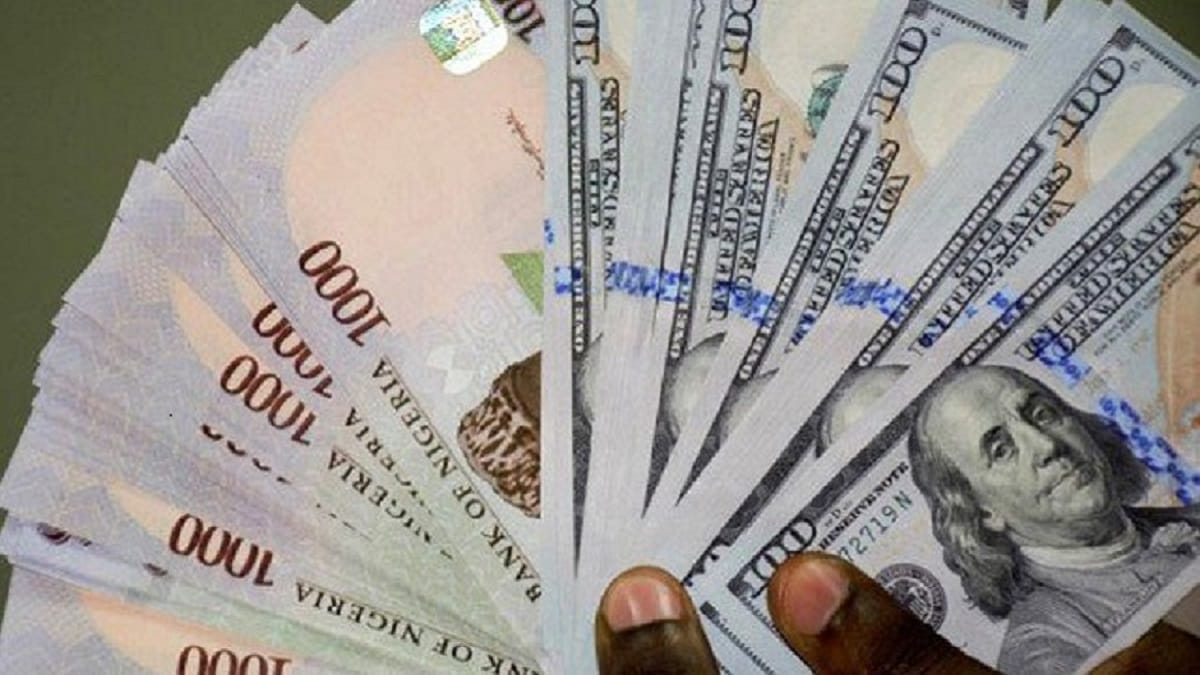
At the organised FX market for investors and exporters, the exchange rate settled at N741.85 per US dollar at the weekend. In the open market, the dollar was sold for N1,000, translating to more than N258 as the difference
This provides solid foreign currency speculation in the economy, analysts said, adding that people who have sources to raise foreign currency could become rich without productive activities. Despite not being a legal tender, almost all Nigerians prefer to spend the greenback as the local currency continues to lose its allure.
Keeping naira in savings accounts has become an economic error due to accelerating headline inflation and worsening exchange rates across FX markets, wealth managers at Broadstreet told MarketForces Africa in a chat.
The feeling in the market is that the Nigerian naira would fall further without immediate backup from the apex bank, though analysts are seeing a recent move to bring Bureau de Change operators into the fold as positive if there is an appropriate level of funding to balance demand and supply.
With a widening gap between official and parallel market exchange rates, Broadstreet analysts projecting that Nigeria may not experience a market clearing rate in 2023.
“It is unlikely to see exchange rates convergence in 2023 with the level of FX exposure that the apex bank has plus FX backlog owed to investors”, a consultant at LSintelligence Associates said. Recall that the apex bit the bullet in June with a decision to float the local currency without know efforts by the fiscal authority to boost FX revenue generation in a country that depends heavily on imported goods and services.
Sustained demand for foreign currency amidst scarcity has continued to affect the local currency, Naira has continued to weaken due to inadequate forex supply across the markets.
“We are back to square one already as devaluation appeared to have failed”, analysts said in a chat with MarketForces Africa, noting that the gap between official and parallel market rates rose above 33% in the just concluded week.
Last week, exchange rates worsened further across the markets over excessive reliance on the US dollar for conducting major transactions. In Nigeria, the US dollar has become king of all currencies despite moves by countries to de-dollarise their respective economies.
Though the oil market gave up gains, the price per barrel remains above 2023 budget crude oil price benchmark. The downside to FX revenue accretion has been the nation’s inability to pump more oil for exports.
“There is also another side to export receipt. Oil was swapped and there is baggage of FX claim on external reserves”, analysts at LSintelligence Associates said in an email commentary. Last week, Nigeria’s FX reserves declined further. Data from the Central Bank of Nigeria showed that gross reserves level fell by USD10.59 million to USD33.227 billion.
Meanwhile, the naira appreciated by 1.8% to N741.85 per US dollar at the investors and exporters FX window, with total turnover at the window decreasing by 42.6% to USD271.06 million on Thursday. According to Cordros Capital, trades were consummated within the N700.00 – N819.90/USD band. In the forwards market, the naira rate on the 1-month contract appreciated by 0.6% to N786.31 but 3-month contract depreciated by 0.2% to N804.88.
Also, 6-month fell by 2.0% to N837.36 and 1-year contract declined by 3.0% to N903.54. “The narratives in the FX market have remained the same in recent weeks, as FX reform momentum has slowed down, analysts said. Barring any significant positive developments, analysts at Cordros Capital said they expect the lingering low crude oil production and a sustained dip in foreign investors’ net flows to weigh on FX supply in the short term.
Last week, the Nigeria Autonomous Foreign Exchange Fixing (NAFEX) rate traded within the range of N590-N851 per US dollar but closed at N755.3, according to data from FMDQ. This points towards a depreciation of -1%% or N7.5 over a week, Coronation Research said in its market update. The exchange rate worsened due to increased demand for making payments for imported goods and services.
Unfortunately, Nigeria is earning less from oil export sales which account for about 80% of the federal government’s revenue. In the parallel market, the US dollar was exchanged for N1008, leaving the gap between the NAFEX and the parallel market rate is 33.4%. .
In the previous week, the NAFEX window recorded an inflow of USD310.3 million with the CBN accounting for 20.6%, FPIs accounting for 2.2%, non-bank corporates accounting for 28.4%, exporters accounting for 33.2%, and others accounting for 15.6%.
Nigeria’s leading investment firm banking firm, CardinalStone Limited, projected that the negative impacts of a weaker currency and stubbornly high inflation will likely worsen in the second half of 2023.
This week witnessed a significant decline in oil prices, primarily driven by the surge in fuel inventories and mounting apprehensions regarding demand. West Texas Intermediate (WTI) plummeted to $82.50, while Brent crude traded at $84.23.
Market data showed that the price of Nigerian Bonny Light crude oil closed below the $100 mark, falling to $93.26 per barrel as demand fears began to creep in. Nigeria Eurobond Slumps after CBN Resumes OMO Auction
