

African Currencies Mixed as Dollar Posts Strongest Week Since October
African currencies: A strengthening US dollar pulled the South African rand and Nigerian naira lower in the week ended Nov. 13, but currencies in Kenya and Egypt held up, leaving Africa’s main currencies with a mixed record.
The US dollar rose against all the G10 currencies last week except for the Swiss franc. The gains were concentrated against the dollar-bloc currencies and the Scandis.
The Bloomberg Dollar Spot Index rose 0.7% for the week, its biggest weekly gain since early October, and touched its highest level since May 2025 on Friday as investors bet the US Federal Reserve will raise interest rates next month.
South African Rand was the week’s big loser
The South African rand was the weakest of the group. The local unit closed Monday near R16.38 per dollar, then lost ground each day, ending Friday near R16.92 to R16.94, about 2.4% weaker than R16.53 the prior Friday.
The local currency exchange rate slid about 1.2% on Friday alone, to a seven-month low after US producer price inflation accelerated to 6.5% in October from 6.3% in September.
The Reserve Bank raised its repo rate by 25 basis points to 7.25% in September. Attention now turns to Wednesday’s October inflation data and Thursday’s Reserve Bank rate decision.
The bank raised its repo rate by 25 basis points to 7.25% in September. The Bureau for Economic Research expects inflation to rise to 5.1% but forecasts that the bank will leave rates unchanged. October inflation data is due Wednesday, and the rate decision is expected Thursday.
Nigerian Naira sees late recovery at official window
The naira dropped N10.50 in a single session on Wednesday, to N1,364 per dollar, its sharpest daily fall since Oct. 22, but recovered to close Friday at N1,353.50.
The official NFEM rate was N1,353.97 on Friday, according to the Central Bank of Nigeria’s daily FX data, about 0.5% weaker than N1,346.79 a week earlier.
The parallel market was softer, with quotes around N1,435 to N1,441, roughly N30 weaker than the week before, though one report had it nearer N1,408. Gross reserves slipped to $54.87 billion.
Cedi and shilling: steady
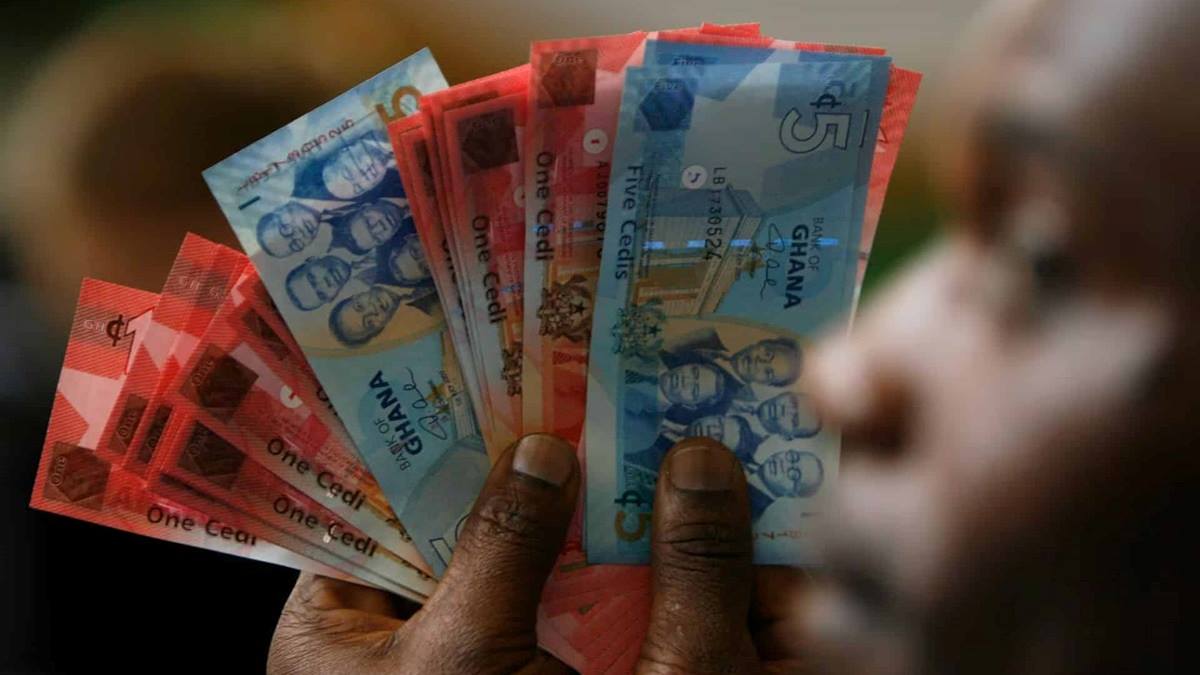
The cedi was slightly weaker on the Bank of Ghana’s interbank market, at GH¢11.70 to GH¢11.72 per dollar on Friday, against GH¢11.67 a week earlier, about 0.4%.
Ghana’s sovereign currency has depreciated about 10% against the dollar this year, according to Databank Research, though the central bank’s gold-linked auctions aim to supply $800 million of dollar liquidity in November.
Inflation rose to 5.5% in October, its highest in 11 months, ahead of a rate decision scheduled for Nov. 18. Forex bureaus sold dollars at GH¢12.35. The central bank is expected to decide on interest rates on Nov. 18, after inflation rose to 5.5% in October.
The Kenyan shilling was unchanged at KSh129.96 per dollar on Nov. 12, for the third straight week, according to the Central Bank of Kenya (CBK). It firmed against the pound and euro, to KSh172.72 and KSh144.38. Reserves slipped $94 million to $14.605 billion, still covering 5.9 months of imports.
Egypt pound records sharp recovery
The Egyptian Pound (EGP) appreciated steadily against the US Dollar during the trading week ending November 13, 2026, recovering from early-week lows near EGP 54.30 to close around EGP 53.37 – EGP 53.50/$ across official and interbank windows.
Trading opened on Sunday, November 8, with major Egyptian banks quoting the dollar at an average of EGP 54.20 / 54.30 (buy/sell). By Thursday, November 12 (the final Egyptian banking session before the Friday–Saturday weekend), the pound had strengthened by roughly 1.4%.
Stronger foreign currency liquidity underpinned the pound’s weekly gains, including Central Bank of Egypt (CBE) disclosures showing diaspora remittances hit $13 billion in Q1 FY 2026/2027, alongside moderating October headline inflation (12.7%) and core inflation.
South African Rand Weakens as Dollar Gains, Precious Metals Slide
