

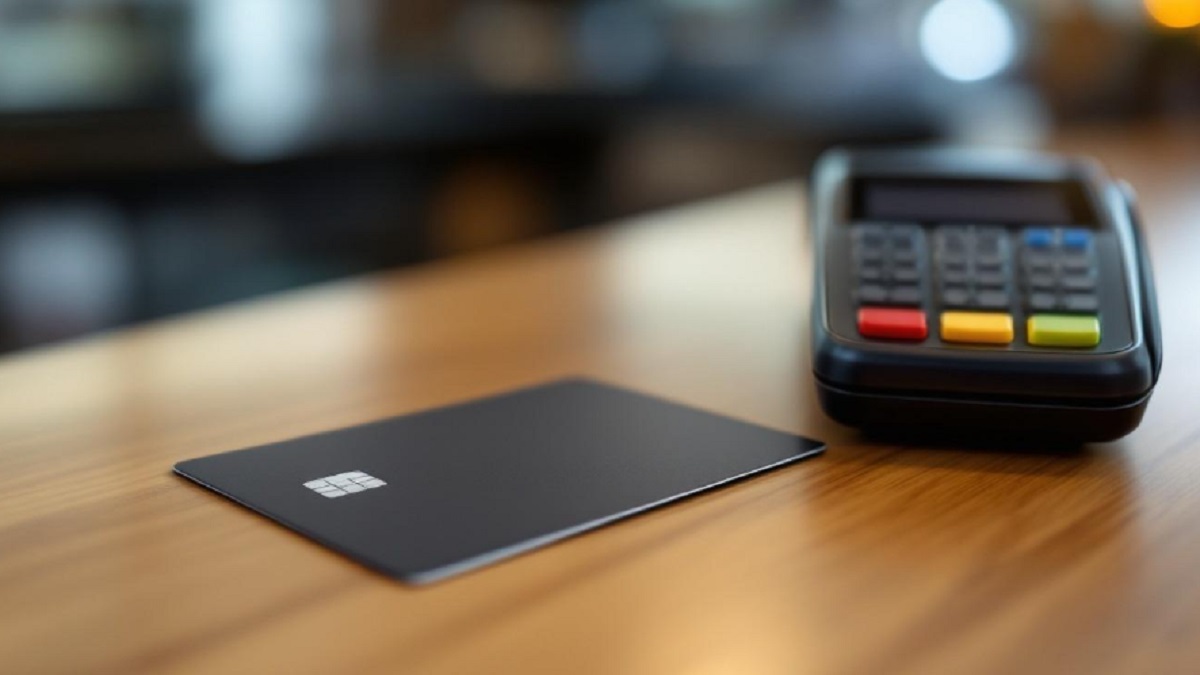
Are Visa or Mastercard truly the best payment methods?
Payments made through Faster Payments and other forms of remote banking reached 6.2 billion in the UK in 2025, UK Finance reported in its annual Payment Markets Report on 19 August.
That made bank transfers the second most used way to pay in the country. Only debit cards carried more, at 26.6 billion payments, and almost all of those ran over one of two American-owned networks.
The two card networks are the default, and for the person tapping a card they are hard to fault.
Whether they are the best depends on who is asking: the shopper, the business taking the money, the person waiting to be paid, or a central bank deciding how much of its payments traffic should run on foreign rails. Britain’s payments regulator has been building the evidence in public since 2022.
The answer is a qualified no. The networks remain the best tool yet built for paying a stranger, especially across a border. Their charges to the businesses that accept cards have risen well ahead of inflation, and money flowing back to consumers has become a genuine contest.
The counterweight is that bank payments still lack a dispute system as proven as the card schemes’ own, and the schemes are now building versions of the bank rail themselves.
At the till, the shopper’s case for the card is strong
UK Finance found that about 45.9 million people, 80% of UK adults, bought something online in 2025, and that cards stayed the main way they paid, directly or through phone wallets.
Online card spending grew 4% in volume but only 1% in value, as the average purchase size decreased. Acceptance is the obvious strength. A British card works with a merchant abroad because both banks are part of the same network and follow the same rulebook.
Protection is the quieter one: a debit card carries the networks’ chargeback rules, and a credit card adds the lender’s joint liability with the seller under consumer credit law. An ordinary bank transfer carries neither.
Shoppers do pay for those strengths, though not at the till. When the Payment Systems Regulator (PSR) issued its final card-fee directions this summer, it noted that scheme and processing fees “are ultimately covered by consumers through prices they pay for goods and services”.
Merchants pay two card fees, and only one is capped
Every card payment a British shop accepts carries a merchant service charge, and two slices of it flow to the card side of the deal. The first, interchange, goes to the cardholder’s bank.
Since 2015, it has been capped at 0.2% of the transaction on consumer debit cards and 0.3% on consumer credit cards, where the shop, acquirer and card issuer are all in the UK.
The second slice, the scheme and processing fees the networks charge acquiring banks, has no cap. The PSR’s market review found in 2025 that the two had raised these core fees by more than 25% in real terms between 2017 and 2023, costing British businesses at least £170 million a year extra.
Its managing director, David Geale, said the evidence suggested they “might have been able to charge UK businesses millions of pounds more than they would in a properly competitive market”.
| Part of the card fee | Who collects it | Capped in the UK? | Latest regulatory step |
| Domestic interchange | The cardholder’s bank | Yes: 0.2% on consumer debit, 0.3% on consumer credit | Cap in force since 2015 |
| UK-EEA online interchange | The cardholder’s bank in the EEA | No | High Court upheld the PSR’s power to cap it in January 2026 |
| Scheme and processing fees | Visa or Mastercard | No | Disclosure and pricing-governance directions issued in July 2026 |
| Merchant service charge as a whole | The merchant’s acquirer | No | Price summaries and prompts to shop around, required since July 2023 |
The remedy stopped short of a price cap. The first of two directions issued on 30 July requires each network to tell acquirers what every fee is, how it is triggered and how it is calculated, with twelve months allowed to build the systems. Under the second, from the end of November, each must keep a signed record of the reasoning behind every new or changed fee on UK transactions and hold it for ten years.
Cross-border fees are a separate fight. In January the two networks and Revolut, a digital bank, lost a High Court challenge to the regulator’s power to cap interchange when cardholders in the European Economic Area buy online from British sellers. The PSR’s plan for 2026/27, published in March, promised “next steps” on those fees.
Payouts are where the race is open
Money also travels the other way, and there the bank rails have long done the heavy lifting. UK Finance counted 3.1 billion payments from businesses to individuals in 2025, the wages, benefits and refunds that flow to households. Bacs Direct Credit, the batch system long used for payroll, fell 2% to 1.8 billion payments, which UK Finance put down to business payments moving onto Faster Payments.
The networks responded by turning the debit card into a destination. Visa’s 2025 annual report says its Visa Direct service “began with cards”, letting people receive money into their bank accounts through a debit card, before adding accounts and wallets.
It handled more than 12.5 billion transactions in that financial year, roughly eight times its 2019 level. Mastercard pursues the same idea through Mastercard Send, part of its Mastercard Move portfolio.
For the person being paid, what matters is which rail lands the money soonest and most predictably, and the receiving end counts as much as the sender.
Online casinos licensed in Britain often put those rails side by side, since a withdrawal can go to a debit card through Visa Direct or Mastercard Send, to an e-wallet, or straight to a bank account by open banking.
Gambling.com publishes a fast withdrawal casino uk comparison page for that market, which reports the results of its own test withdrawals by debit card, e-wallet and bank transfer.
Those tests bear directly on the choice between the two networks, though one publisher’s sample cannot settle it. The page reports that some Mastercard debit payouts took longer to land than Visa ones, even where the casino had released them at once.
That evidence comes from a single market. Sites licensed by Britain’s Gambling Commission serve customers in Great Britain only, and only adults aged 18 or over, so the page describes a market open to them alone, not to readers in Nigeria.
Credit cards have been barred from British gambling since 2020; one reason debit cards and bank transfers are used for these payouts.
Help is free at any hour. Callers in England and Scotland can ring GamCare’s National Gambling Helpline on 0808 8020 133, and Wales now has its own NHS helpline on 0808 281 9265.
Bank payments are coming for the regular bills
Open Banking Limited’s monthly figures show the bank rail growing fast, though not what the money is paid for. It recorded just over 42 million open banking payments in August, about a third more than a year earlier.
Variable recurring payments, standing permissions that let money be drawn from an account within limits its owner sets, made up 7.7 million of them, close to one in five.
This summer an industry-owned company, the UK Payments Initiative, launched the first commercial scheme for such payments to businesses, starting with government bodies, utilities, charities and financial firms. Its managing director, Richard Koch, said the plan was to grow “from these first customer journeys to subscription models and wider ecommerce”.
Open Banking Limited has pitched such payments as an alternative to both Direct Debit and stored-card billing.
Protection is the open question. UKPI says its scheme includes safeguards and dispute processes, but it has run only since the start of the summer, against card dispute rules that banks have applied for years.
The networks are not waiting to lose that business. Visa launched its own account-to-account service in Britain in its 2025 financial year, which its annual report describes as “an open system bringing standards, rules and a dispute management service” for bill payments.
The same report states the aim plainly: to “capture value and drive yield” from consumer payments that run over account-to-account networks.
Visa has owned Tink, an open banking platform, since 2022. If paying by bank wins, the winning product may still carry a card network’s name.
Nigeria answered the question with a card of its own
Britain chose to regulate the two networks and to grow bank payments beside them. Nigeria tried a third route. When the Central Bank of Nigeria and NIBSS launched AfriGo, a national domestic card scheme, in January 2023, the then governor, Godwin Emefiele, pointed to the high cost of card services caused by the foreign-exchange requirements of international card schemes.
Much of his case was about currency rather than convenience. Existing cards would stay in use, he said, “but given that the charges on those cards are in dollars, we will no longer pay for those charges”. He named China, Russia, Turkey and India as countries that had already built domestic schemes.
The trade-off appears whenever Nigerians spend abroad, because AfriGo was designed for payments at home. This publication reported in August that GTBank had doubled the quarterly limit on foreign spending with its naira debit cards to $40,000 for the summer holidays, a reminder that a card’s global reach is only as wide as the currency behind it.
The central bank’s Payments System Vision 2028, launched in June, targets 95% financial inclusion. That goal depends on cheap payments at home far more than on a card that works in London, which is the case AfriGo was built to make.
One party wins in every British seat
Run back through the British seats and one party comes out ahead in all of them: the networks themselves. Visa’s net revenue rose 11% to $40 billion in its 2025 financial year, and it kept just over $20 billion as net income. Mastercard’s net revenue for 2025 came to $32.8 billion, with an operating margin of 57.6%.
The regulator has noticed. In May the PSR opened a consultation on UK profitability reporting that would make both schemes file a profit and loss account for their UK card businesses, after its review found evidence consistent with margins above what competitive markets produce. Its July announcement confirmed that work was continuing.
That is the strongest argument for the card and the strongest against it. A business earning margins like these can afford to keep improving acceptance, fraud tools and payouts, and it also has every reason to keep its prices where they are. Which of those wins in Britain will turn less on shoppers than on what the regulator finds if those profit accounts arrive.
