

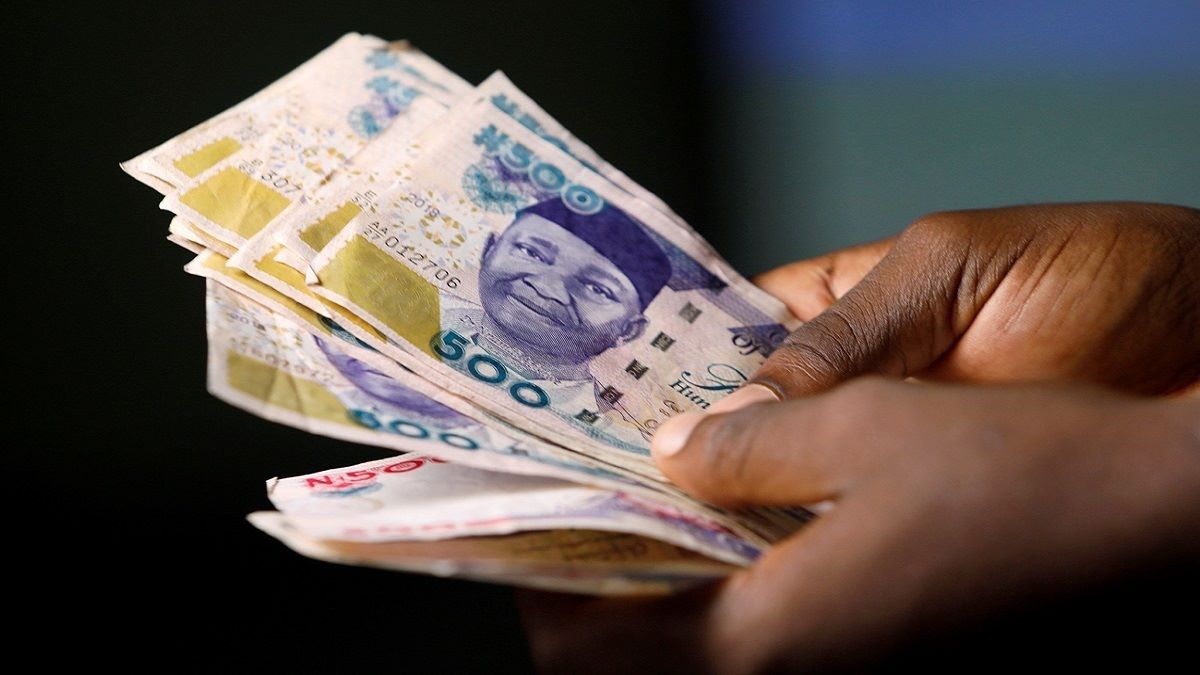
Naira Lost Despite CBN Intervention, Foreign Reserves Hit $45bn
The naira recorded more than N3 weekly exchange rate depreciation despite sustained FX intervention sales by the Apex Bank. The official spot rate closed at N1450.4287 per dollar on Friday, depreciated from N1446.7421 at the end of November.
The Nigerian forex market is in short supply of US dollars amid mounting demand for foreign payments by eligible market players.
The market recorded inflows from Foreign Portfolio Investors (FPIs) and occasional CBN intervention to improve supply but was unable to lower the demand pressure. Overall, the naira weakened to close at ₦1,450.43, supported by additional FX injections by the authority.
The Central Bank of Nigeria (CBN) injected $100 million into the forex market via US dollar sales to authorised dealers, banks at the official window.
Without the support, the naira exchange rate would have more than worsen, pulling back from N1421 per dollar reached last month – its best Q4 performance before US Donald Trump Christian genocide invasion threat.
Meanwhile, gross FX reserves increased for the nineteenth consecutive week, growing by USD184.88 million week on week to USD45.04 billion.
In a commentary note, analysts at Cordros Capital Limited said the global environment remains supportive of net capital inflows amid ongoing global monetary easing and reduced geopolitical tensions.
The firm said a positive current account position and rising external reserves continue to underpin investor confidence in Nigeria markets.
“The pace of growth in goods import demand remains relatively slow, helping to contain demand pressures. Therefore, we expect the naira to remain broadly stable over the near to medium term, driven by strong net FX liquidity”, analysts said.
Oil prices edged up nearly 1% to a two-week high on increasing expectations the U.S. Federal Reserve will cut interest rates next week, which could boost economic growth and energy demand, as well as geopolitical uncertainty that could limit supplies from Russia and Venezuela.
Brent crude futures for February settled at $63.75 per barrel, up $1.37 or 2.20%, while West Texas Intermediate (WTI) futures closed at $60.08 per barrel, gaining $1.53 or 2.61%.
Gold prices fell w/w as firmer U.S. Treasury yields outweighed support from a softer dollar, with investors growing cautious ahead of upcoming U.S. inflation data that could shape the Federal Reserve’s interest-rate outlook.
Consequently, spot gold shed 0.79% to finish at $4,197.25 per ounce. Markets are likely to remain cautiously optimistic next week, with gold and oil prices supported by expectations of a Federal Reserve rate cut and a softer dollar — although rising Treasury yields may continue to cap upside for gold.
Aradel Holdings: A Good Time to Anticipate Price Swing
