

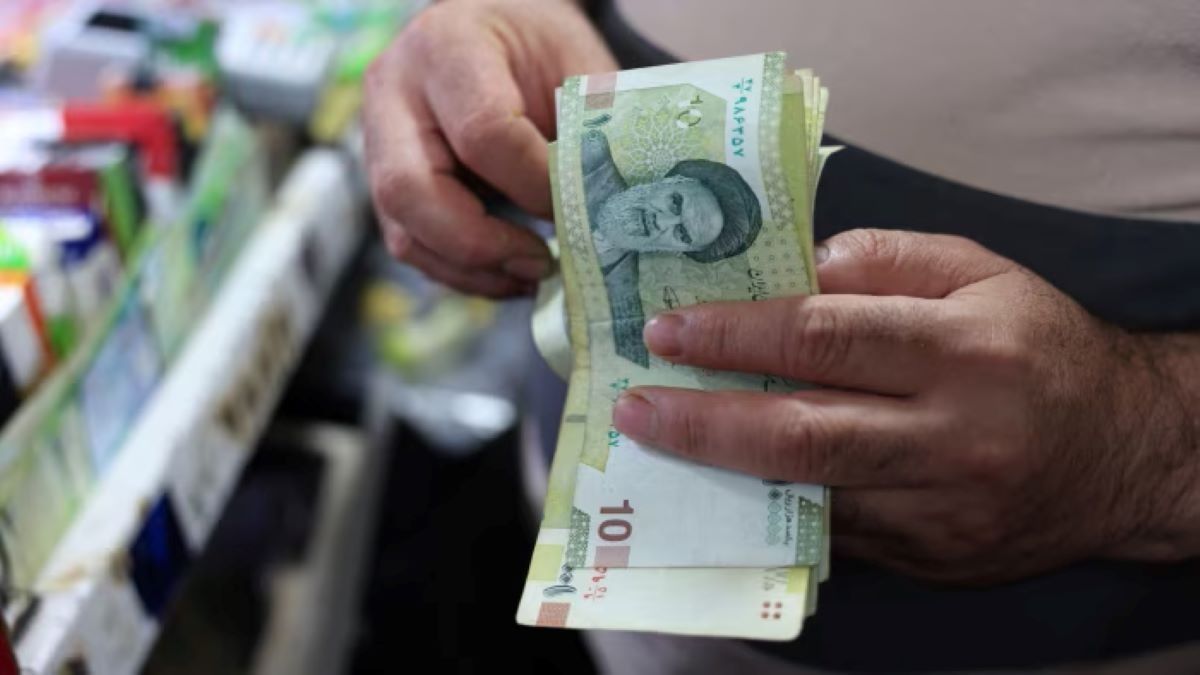
Iran Approves Plan to Redenominate Currency
Iran’s parliament on Sunday approved a plan to remove four zeros from the national currency, the rial, which has sharply depreciated as the country grapples with renewed sanctions.
Lawmakers passed the bill two months after a parliamentary commission revived the long-stalled proposal aimed at simplifying transactions, the legislature’s website said.
Under the revised law, 10,000 current rials will be equal to one new rial, which will be divided into 100 Qerans. The Central Bank of Iran (CBI) will be responsible for setting foreign currency exchange rates and buying and selling currency in line with the prevailing monetary system and foreign currency reserves.
CBI is expected to draft implementing regulations within three months, subject to approval by the High Board and the Cabinet. Both versions will circulate for up to three years, with the central bank given two years to launch the transition.
“A maximum three-year transition period, referred to as the “dual circulation phase,” will allow both the current rial and the new rial to circulate simultaneously”, state TV reported. ‘
The rial has hit repeated record lows in recent days, according to black market trackers, amid the re-imposition of United Nations sanctions on Iran.
Britain, France and Germany — signatories to Iran’s moribund 2015 nuclear deal — last month triggered the “snapback” mechanism to restore the international sanctions over the Islamic republic’s non-compliance.
On Sunday, the rial was trading at about 1,115,000 to the US dollar, compared with around 920,000 when the plan was revived in early August.
The redenomination was first floated in 2019 but later shelved. It still requires approval by the Guardian Council and the signature of President Masoud Pezeshkian to take effect.
In daily life, Iranians drop a zero from the rial and use the resulting figure, called the toman, for most transactions. Iran’s redenomination plan has been under discussion for years amid high inflation and depreciation of the rial.
Removing four zeros is aimed at simplifying financial transactions, accounting, and the use of currency in daily life, though analysts note it does not by itself address underlying inflationary pressures.
Capital Gains Tax: Will 25% Compromise Calm Nigeria’s Capital Market?
