

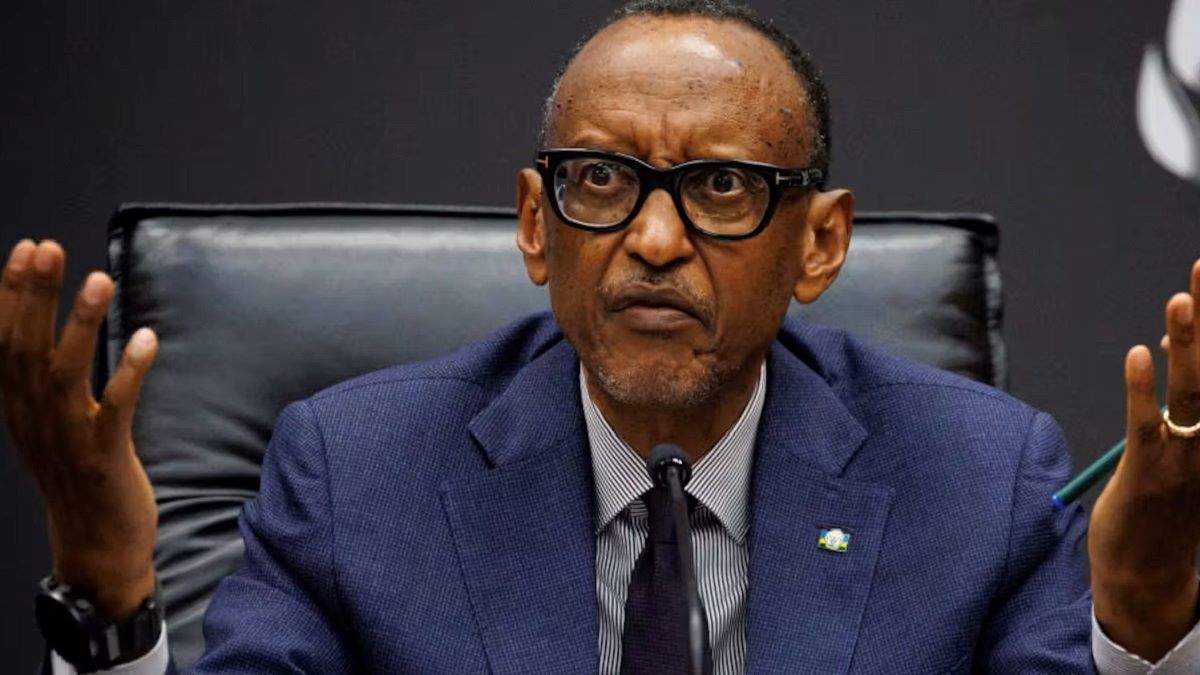
Fitch Revises Outlook on Rwanda to Negative
Fitch Ratings has revised the outlook on Rwanda’s long-term foreign-currency issuer default rating (IDR) to negative from stable and affirmed the IDR at ‘B+’. The revision of the outlook of Rwanda’s IDRs reflects high risk to external funding, escalating regional tensions and government debt, according to the rating note.
According to Fitch, the escalation of the armed conflict in the eastern Democratic Republic of Congo (DRC) could significantly reduce Rwanda’s access to concessional external funding, potentially pressuring external and fiscal metrics and economic growth.
“While our baseline assumes only a small impact from the announced donor cuts to budgetary grants, these could extend to capital grants—the largest component of total grants and concessional loans from the official sector in case of prolongation or further escalation of the conflict”.
Fitch said grants constitute a significant source of government revenue for Rwanda, averaging 4.5% of GDP over 2023 and 2024. The rating analysts estimate external loan commitments from bilateral and multilateral sources at about USD1 billion per year in 2025 and 2026.
The rating note stated that external loans from the official sector are Rwanda’s main source of government and external financing; 88% of the government’s external debt is concessional.
Grants and concessional project loans also finance a significant portion of Rwanda’s high level of public capital expenditure at an average 10.0% of GDP in 2023 and 2024, which is an important driver of the country’s strong economic growth.
The Congolese paramilitary rebel group M23 escalated its military action in January and February 2025, capturing important cities in eastern DRC. The Rwandan Defence Forces alleged support to M23 led to a donor backlash.
The UK paused bilateral aid and Germany suspended new financial aid to Rwanda, with the US and Canada imposing a combination of measures including export curbs, sanctions on Rwandan officials, and revision of government participation in international events hosted by Rwanda.
It also noted that the Rwandan government ended bilateral aid and diplomatic relations with Belgium over criticism from Brussels.
In March the presidents of Rwanda and the DRC committed to a ceasefire in talks mediated by Qatar, which later separately also involved representatives of the M23.
Fitch understands that negotiations for the implementation of the ceasefire aim to reach agreement by end-April 2025. Negotiations to address the fundamental causes of the conflict and a retreat by the M23 have resumed, but the prospect of success is unclear.
Ceasefires between Rwanda and the DRC in 2023 and 2024 were breached and failed to translate into a lasting suspension of the conflict.
Rwanda’s government debt increased to 77.8% of GDP in 2024 from 72.8% in 2023 driven by the wide fiscal deficit, exchange-rate depreciation, and build-up of deposits.
Fitch expects debt/GDP to stabilise at around 81% through 2026, reflecting the still wide fiscal deficits and liabilities from the construction of Bugesera airport.
This is well above the 54% of GDP we forecast for the ‘B’ median in 2026. Rwanda’s highly concessional debt mitigates near-term sustainability risks.
The average time-to-maturity of external debt was 15 years in June 2024, with an average weighted interest rate of 2%.
Fitch said Rwanda’s ‘B+’ rating reflects its low level of GDP per capita and persistent twin budget and current account deficits (CAD), which have resulted in high public and external indebtedness.
These weaknesses are balanced by the highly concessional nature of the country’s debt, strong governance indicators relative to peers, high medium-term growth potential, and a record of strong official financial and technical support.
Real GDP growth rose to 8.9% in 2024 from 8.2% in 2023 driven by strong public and foreign investment as well as robust household consumption. Fitch expects real GDP growth to average 7% over 2025-2026, supported by construction of Bugesera airport, lower inflation, and strong labour market dynamics.
Analysts said they expect Rwanda’s economic growth rate will remain well above the 4.4% forecast for the ‘B’ median over the same period. Fitch forecasts the fiscal deficit to narrow to 5.9% of GDP in the fiscal year ending in June 2025 (FY25) and to 4.3% in FY26, from 6.4% in FY24; saying the main driver will be a drop in capex.
Government revenue will be broadly unchanged as new tax measures to be implemented between April and June 2025 (increase in excise taxes, instatement and reinstatement of VAT on products such as mobile phones, ICT equipment, and fossil fuels) will offset a decline in grants.
“We assume grants decline to 3.0% of GDP in 2026 from 4.3% in 2024, reflecting a smaller pool but also cuts from donors related to the conflict in the DRC”. Rwanda’s CAD widened to an estimated 13.0% of GDP in 2024 from 11.5% in 2023 driven by a high import bill.
The ratings analysts expect the CAD to narrow to 12.2% and 11.2% of GDP in 2025 and 2026 respectively, partly driven by lower food and fuel imports and reduced capex.
International reserves rose significantly to USD2.4 billion at end-2024, from USD1.8 billion at end-2023, translating into a rise in the coverage of current external payments to 4.4 months, from 3.6 months at end-2023, in line with the ‘B’ median of 4.5 months.
Fitch analysts expect coverage will remain close to 4.3 months over 2025-2026. #Fitch Revises Outlook on Rwanda to Negative eTranzact Plunges Sharply as Investors Exit Positions
