

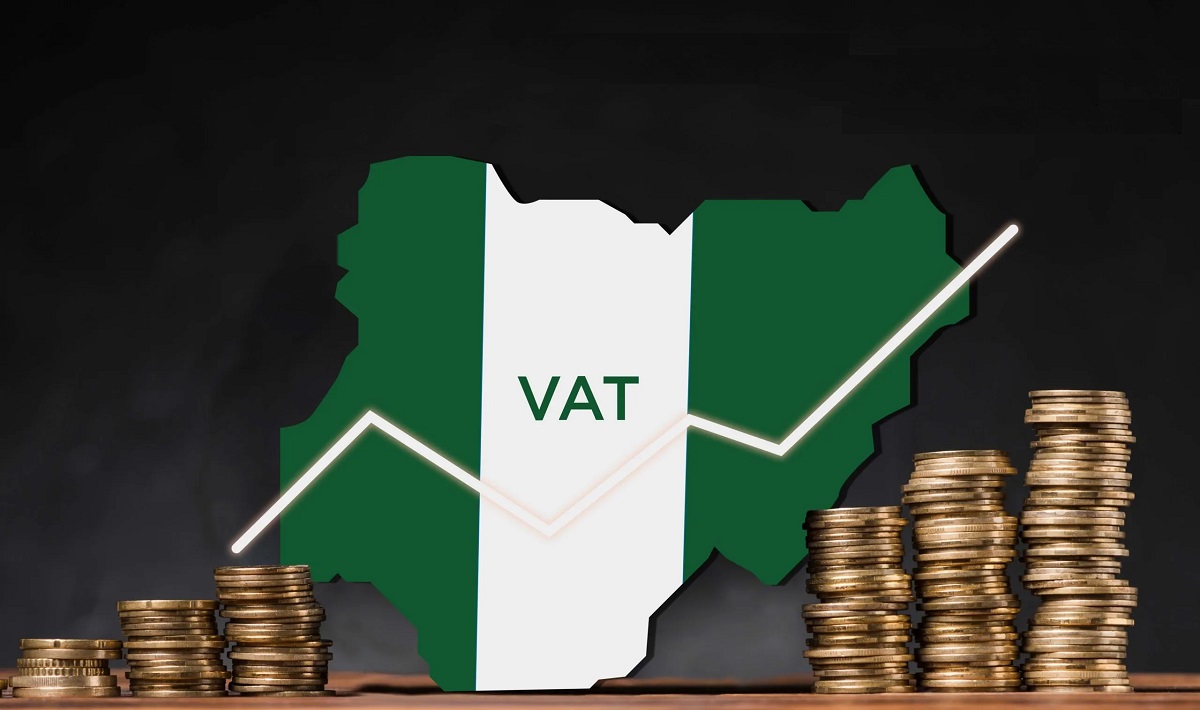
Nigeria’s VAT Jumps as Citizens ‘Ride or Die’ with Inflation
Nigerian government has continued to rake in more money into federation coffers due to surging prices of goods and services, which comes at the expense of citizen who have continued to pay more for less.
On one side of the spectrum, government is winning as income generated from valued added tax (VAT) on goods are expected to continue to rise in line with higher prices in the market.
On the other hand, citizens are facing what appears to be an unending price inflation that followed the malfunctioning policy strategy of the recent past administration.
Latest data showed Nigeria’s increase in value added tax collections came heavy in the first quarter of the year, but rather than been a result of efficient tax on goods collection, the value was driven up north by higher prices.
Recent report by the National Bureau of Statistics (NBS) showed that value added tax (VAT) surged by 101.7% year-on-year to N1.43 trillion in Q1 2024.
VAT income rose from N709.59 billion in the nation reported in the first quarter (Q1) of 2023. On a quarterly basis, VAT increased by 19.2% from N1.20 trillion in Q4 2023.
The VAT rate, which has been set at 7.5% since its increase from 5% in February 2020, is charged on all goods and services produced within or imported into the country, CSL Stockbrokers said in its commentary note.
Analysts noted that persistent inflation has driven up the price levels of goods and services, contributing to the growth of VAT revenues during this period.
Several factors, including rising import duties, the removal of fuel subsidies, and the depreciation of the naira have led to higher prices for goods and services, CSL Stockbrokers said in its Thursday commentary note.
VAT from local payments contributed the most, accounting for 46.3% or N663.18 billion of the overall collection on goods recorded in Q1 2024.
This represents a 52.1% year on year increase from N436.10 billion in Q1 2023 and a 5.3% quarter-on-quarter increase from N630.00 billion in Q4 2023, according to NBS.
In addition, foreign VAT and import VAT contributed 30.5% and 23.2% respectively to the overall collection recorded in Q1 2024, analysts noted.
Year-on-year, foreign VAT increased by 188.3% to N435.73 billion from N151.13 billion in Q1 2023, and import VAT rose by 171.3% to N332.01 billion from N122.37 billion in Q1 2023.
Quarter-on-quarter, foreign VAT increased by 33.6% from N326.27 billion in Q4 2023, and import VAT grew by 36.1% from N244.04 billion in Q4 2023.
The manufacturing sector contributed the highest to the nation’s overall VAT, accounting for 12.4% or N177.17 billion, CSL Stockbrokers said in its note on Thursday.
Analysts said this marks a 37.0% year on year increase from N129.32 billion in Q1 2023 and an 11.5% quarter on quarter increase from N158.90 billion in Q4 2023.
Conversely, activities of households as employers, undifferentiated goods- and services-producing activities of households for own use, contributed the least to the nation’s VAT.
This segment saw a 65.0% year on year decline to N60.12 billion from N171.68 billion in Q1 2023, although it increased by 44.4% q/q from N41.65 billion in Q4 2023. Mauritius Debt to GDP to Slide to 65% in 2025 –Note
