

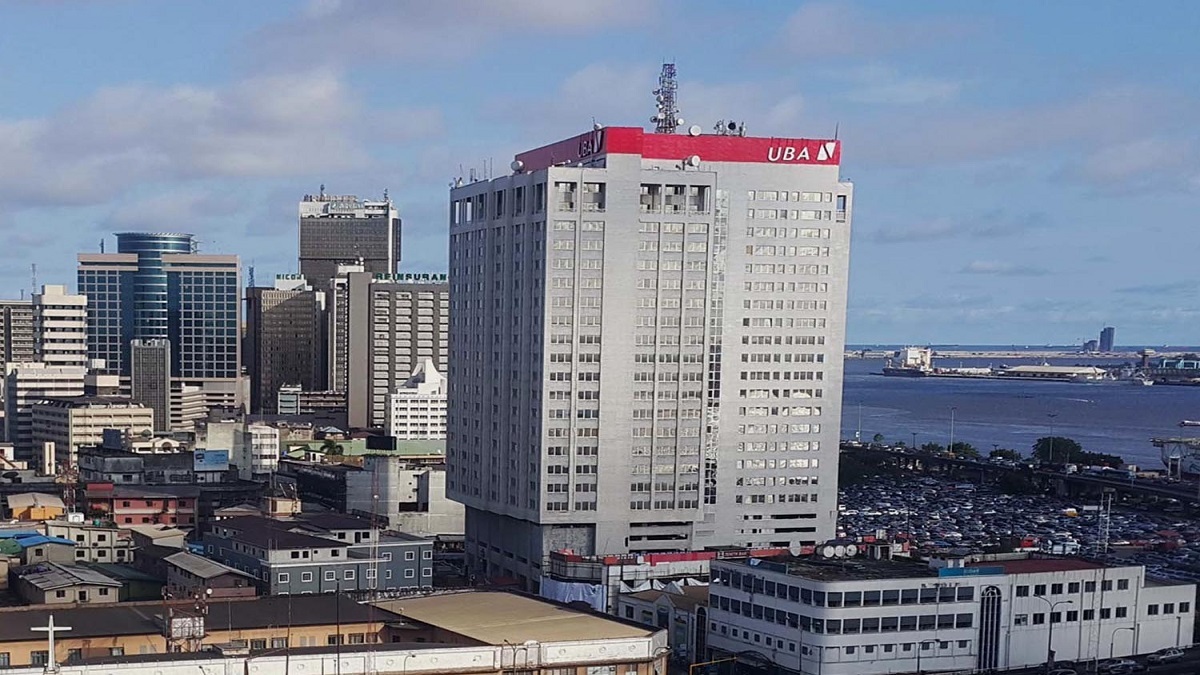
UBA Holds 11% of Nigerian Banking Assets in 2023 – Fitch
Pan African lender, the United Bank for Africa Plc (UBA) represents 11% of domestic banking assets at the end of financial year 2023, according to details from Fitch Ratings report.
In its latest release, Fitch Ratings affirmed United Bank for Africa Plc’s Long-Term Issuer Default Rating (IDR) at ‘B-‘ with a positive outlook.
The global ratings agency also affirmed the bank’s National Long-Term Rating at ‘A+(nga)’ with a stable outlook, saying UBA ratings are driven by its standalone creditworthiness, as expressed by its viability rating.
Fitch noted that UBA viability is constrained by Nigeria’s Long-Term IDR of ‘B-‘ due to the bank’s high sovereign exposure relative to capital and the concentration of its operations in Nigeria.
It said UBA represented 11% of domestic banking sector assets at the end of 2023 and has a large pan-African network, with subsidiaries in 20 countries outside of Nigeria contributing 33% of net income in 2023 and 47% of assets.
According to Fitch, UBA’s ability to capitalise on business and trade flows and attract deposits across the continent is a competitive advantage relative to domestic peers and leads to stronger revenue diversification.
The rating note stated that the bank’s single-obligor credit concentration is moderate, with the 20-largest loans representing 108% of UBA’s Fitch Core Capital (FCC) at the end of 2023.
Oil and gas exposure which reached 19.5% of net loans in 2023 is lower than peers, according to the ratings note. However, Fitch noted that the bank’s exposure to Nigerian sovereign securities and the Central Bank of Nigeria’s cash reserves is high, albeit lower than that at other large banks.
UBA’s impaired loans (Stage 3 loans under IFRS 9) ratio increased to 6.2% in 2023 from 3.4% in 2022. Analysts however said, at 23%, the bank’s specific loan loss allowance coverage of impaired loans is low due to significant cash collateral.
Details from the rating note revealed that UBA’s stage 2 loans was high at 14% of gross loans; and they are concentrated within the oil and gas and power sectors and largely US dollar-denominated
The sizes of stage 2 loans represent a risk to asset quality. Fitch forecasts the impaired loans ratio to increase moderately in the near term.
Fitch said UBA delivers sound profitability, as indicated by operating returns on average total assets averaging 2.8% over the past four years.
Operating profit increased to 5.1% of average total assets in 2023, primarily driven by FX revaluation gains that accompanied the devaluation of the naira, and profitability will benefit from higher interest rates in 2024.
As per Fitch, the Pan African lender has a higher FCC ratio which printed at 35.9% than its peers, which is partly explained by a lower risk-weight density.
UBA’s tangible leverage ratio of 10.1% in Q1-2024 is consider high relative to most Nigerian banks. However, its pre-impairment operating profit is strong, according to Fitch, providing a large buffer to absorb loan impairment charges without pressuring capital.
Fitch expects capital ratios to increase moderately in the near-term as UBA raises core capital in order to comply with new paid-in capital requirements by the end of first quarter in 2026. #UBA Holds 11% of Nigerian Banking Assets in 2023 – Fitch
Reps C’tte Queries NIPC on Utilisation of 20% Revenue Without Authorisation
