

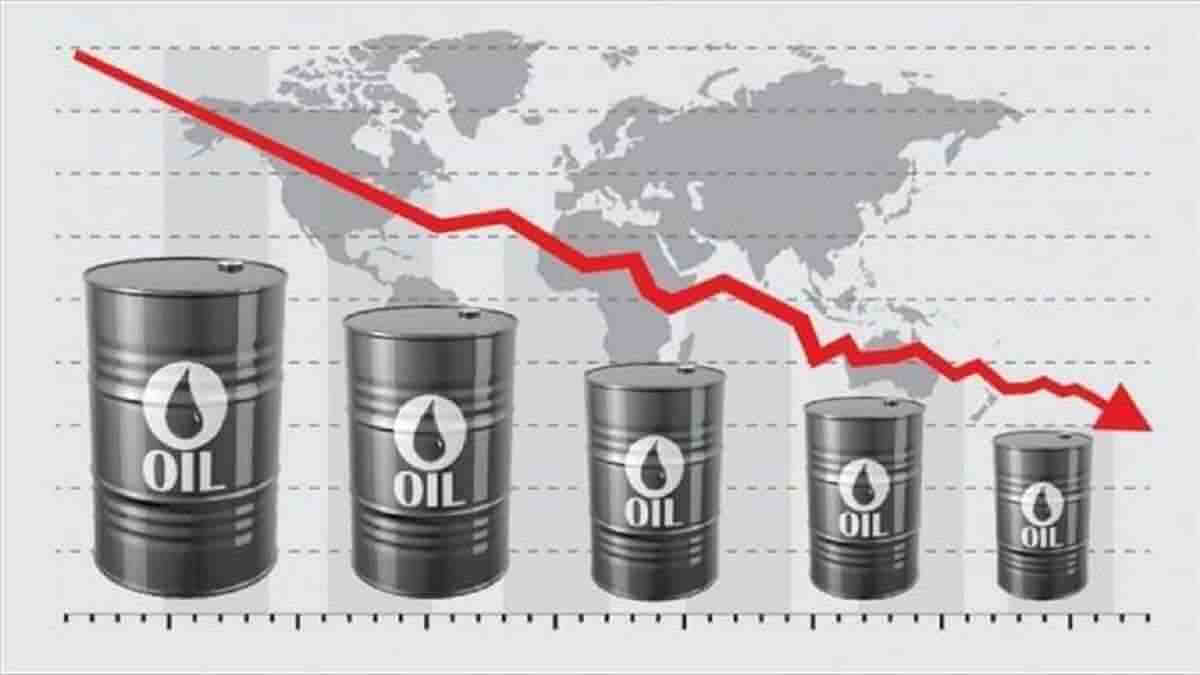
Oil Slides Despite China’s GDP Growth
Crude oil prices decline Wednesday despite reported improvement in China’s gross domestic product growth in the first quarter of the year.
Keeping price surge in check, market analysts said there are growing concerns that major central banks will continue their monetary tightening cycle.
The market switched into bearish mode despite US data showing a decrease in crude stockpiles, indicating a rebound in demand in the world’s largest consuming country.
International benchmark Brent crude traded at $84.36 per barrel, a 0.48% decrease from the closing price of $84.77 a barrel in the previous trading session.
Concurrently, the American benchmark West Texas Intermediate (WTI) traded at $80.53 per barrel, down 0.45% from the previous session’s close of $80.90 per barrel.
Yesterday, crude oil prices increased as China released better-than-expected economic data, indicating improved demand in the world’s second-largest oil-consuming country.
China’s first-quarter gross domestic product increased sharply compared to expectations, putting the country in the spotlight after it lifted its strict pandemic measures.
According to China’s National Bureau of Statistics on Tuesday, Chinese GDP grew by 4.5% in the first quarter, marking the highest growth since the first quarter of last year, when it grew by 4.8%.
China’s positive data supported the upward price movement, while the market observes supply-side developments after the OPEC+ decision to cut 1.6 million barrels per day (bpd) as of May, on top of its previous 2 million bpd reduction.
Markets are still pricing in a pessimistic scenario in which rising interest rates and high inflation dampen oil demand. Fears heightened after Atlanta Federal Reserve President Raphael Bostic pointed to ‘one more interest rate rise’ to lower high inflation.
‘One more move should be enough for us to then take a step back and see how our policy is flowing through the economy, to understand the extent to which inflation is returning back to our target,’ Bostic said in an interview.
The US Fed made a total of 425-point interest rate increases on seven occasions last year to fight record-high inflation that climbed to the highest level in over 40 years by mid-2022.
It later made a rate increase of 25 basis points on Feb. 1, followed by another hike of 25 basis points on March 22 that carried its benchmark funds rate to a range of 4.75% to 5%.
However, demand rebound expectations rose, alleviating concerns about falling demand, after the American Petroleum Institute (API) announced late Tuesday an estimated decrease of 2.67 million barrels in US crude oil inventories, more than the market expectation of a 2.46 million-barrel draw.
The US Energy Information Administration’s (EIA) data on oil stocks will be announced later on Wednesday, and if the decline in stock levels is confirmed, prices are expected to rise. # Oil Slides Despite China’s GDP Growth
