

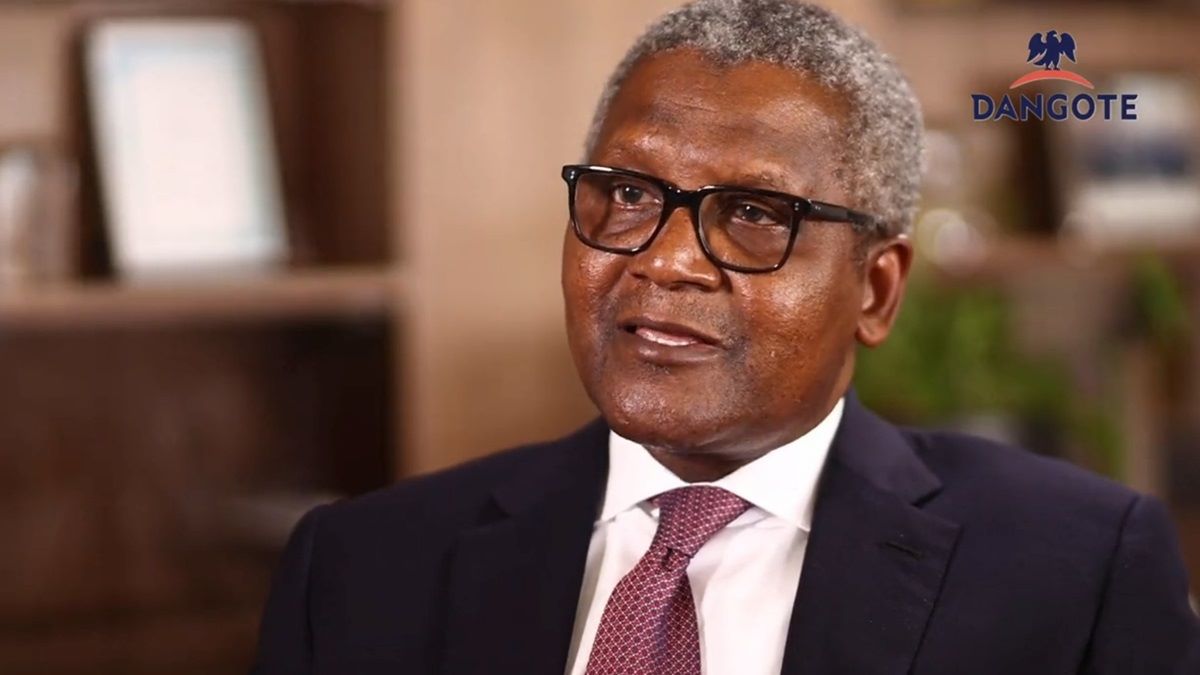
FX Challenges Force Dangote Out of Flour, Textile Businesses
Aliko Dangote has revealed that persistent foreign exchange (FX) challenges forced him to exit Nigeria’s flour and textile industries, marking one of the most significant strategic shifts in his business career.
Speaking during an interview with Nicolai Tangen, Dangote explained that volatile currency conditions and rising operational pressures made continued investment in the sectors increasingly unsustainable. The interview, released on YouTube on May 14, 2026, offered rare insight into the high-stakes decisions that shaped the evolution of the Dangote Group.
According to Dangote, the decision to divest from flour and textile operations was ultimately driven by the harsh realities of accessing foreign exchange for industrial production.
The billionaire industrialist noted that the sectors became difficult to sustain amid mounting FX constraints, which continue to challenge manufacturers dependent on imported raw materials and machinery.
He disclosed that the experience reinforced his determination to focus on large-scale industrial projects capable of generating stronger export earnings and long-term dollar liquidity.
Today, the Dangote Group’s strategic priorities are centred on cement, fertiliser, petrochemicals, and refining sectors, positioned to strengthen Nigeria’s export capacity and improve foreign currency inflows.
Dangote stated that the group is now performing strongly in exports and plans to pay future dividends in dollars across its major businesses, including the refinery, fertiliser, petrochemical, and cement divisions.
The billionaire also reflected on the personal sacrifices behind the expansion of his industrial empire. He revealed that he sold his private apartments in both the United States and the United Kingdom to concentrate resources, energy, and attention on building his industrial ventures.
Dangote further disclosed that he abandoned long-standing ambitions to acquire Arsenal F.C., despite having seriously considered the purchase when the club was valued at approximately $2 billion.
According to him, allocating such capital to football ownership would have distracted from the completion of the multibillion-dollar Dangote Refinery project and other critical investments, including fertiliser and petrochemical plants.
Rather than pursue football ownership, Dangote said he chose to prioritise industrial expansion, concluding that completing the refinery project represented a more transformative economic contribution for both his business and Nigeria’s economy.
While he remains a passionate supporter of Arsenal, Dangote indicated that industrial development ultimately took precedence over personal ambition. Weekly Review: NGX Transacts 7.772bn Shares, Gains N3.35trn
