

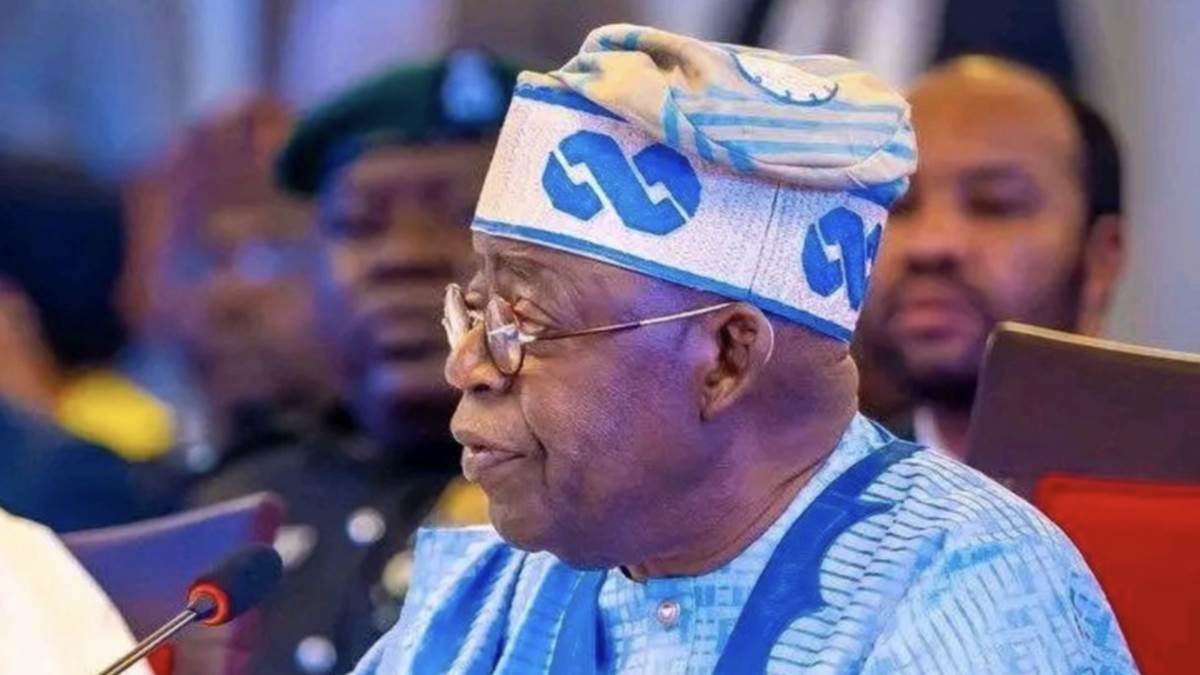
S&P Upgrades Nigeria’s Credit Ratings, Outlook Stable
S&P Global has upgraded its long-term ratings on Nigeria to ‘B’ from ‘B-‘, citing higher oil production and prices, the large increase in domestic refining capacity, and the 2023 decision to liberalise the exchange rate.
The global rating agency said it affirmed its ‘B’ short-term ratings on the sovereign. At the same time, S&P said it raised its long- and short-term Nigeria national scale ratings on the sovereign to ‘ngA+/ngA-1’ from ‘ngBBB+/ngA-2’. The outlook is accorded as stable, the rating note said.
The stable outlook balances Nigeria’s improved external position, including higher FX reserves, firming economic growth, and commitment to economic reform against a still very narrow tax base, and low levels of formal employment.
S&P said following three years of sustained structural reforms, Nigeria’s creditworthiness has improved. Most notably, the liberalization of the exchange rate has bolstered access to foreign currency and enabled a market-driven exchange-rate environment, supporting investor and consumer confidence, while benefiting non-oil GDP growth.
Over the past few years, fiscal revenue has also risen as a percentage of GDP thanks to tax reforms and increased centralization and transfers of petroleum revenue to the federal government.
This follows the signing of the presidential executive order to Safeguard Federation Oil and Gas Revenues and Provide Regulatory Clarity (Executive Order 9), which directs the Nigerian National Petroleum Company to transfer a larger share of its revenue to the federal government account. These factors are likely to continue bolstering fiscal revenue and drive further declines in the interest-to-government revenue ratio relative to historical levels.
As a sizable net oil exporter of crude oil and an emerging producer of refined fuels, Nigeria is less exposed to the spillover effects from the Middle East conflict than most regional peers.
“We have increased our Brent crude oil price assumption to $100 per barrel for the remainder of 2026, up from our previous estimate of $85 per barrel”, S&P said.
Ratings analysts noted that oil production has risen in recent years thanks to improved security conditions in the Niger Delta producing regions, which has helped contain oil theft.
“We expect 2026 production to average approximately 1.66 million barrels per day (mbpd; including condensates), broadly consistent with 2025 levels”.
Significant refining capacity is now also online; Dangote Industries Ltd.’s large-scale refinery and petrochemical complex has ramped up to near its maximum capacity of 650,000 barrels per day.
This relatively new capacity will bolster the economy, particularly by supporting Nigeria’s current account surplus, which we project will improve to 5.8% of GDP in 2026 from 4.8% in 2025.
Additionally, this domestic supply helps ensure the availability of refined fuel, gas, and fertilizer for the Nigerian market, providing a buffer against the global and regional supply constraints caused by the Middle East conflict.
Domestic refining capacity is, however, unlikely to significantly alleviate pressure on fuel prices for consumers, S&P Global stated.
Ratings analysts said although approximately two-thirds of the Dangote refinery’s crude oil feedstock is sourced domestically, global price trends now drive domestic prices, contributing to several increases in petroleum and diesel prices at Nigerian petrol pumps since the outbreak of the Middle East conflict in February 2026, with prices having risen significantly to date.
Furthermore, the refinery remains dependent on imported crude to blend its feedstocks, which further contributes to inflationary pressure.
“We anticipate that structural factors, including elevated and persistent inflation, will continue to weigh on the ratings. Socioeconomic conditions have been exacerbated by high inflation–which has averaged 18.6% per year over the past decade–but which is declining.
“We estimate inflation to average 17.7% in 2026 then fall to below 10% by 2028. The unemployment rate remains elevated and stood at about 30% based on pre-2023 methodology”
However, new methodology being adopted by the National Institute of Statistics has led to sharp downward revision of unemployment levels. Poverty rates have risen to 50% of the population from 30% before 2020, while food insecurity affects 31 million people (up from about 4 million in 2019).
This poses risks to continued reform momentum–especially relating to sizable fuel subsidies (about 2% of GDP historically), which were removed in 2023–if social unrest rises due to high and rising living costs.
“Our rating on Nigeria is also constrained by fiscal revenue remaining among the lowest of rated sovereigns, while debt servicing costs are very high”, S&P said. The ratings agency said Nigeria’s fiscal and external data provision is weak, which complicates analysis of both.
Nigeria is the most populous country in Africa, and the second-largest African economy. It is also a sizable producer and exporter of hydrocarbons, ranking among the world’s top 15 exporters.
Oil accounts for just 5% of GDP but has contributed over one-third of fiscal revenue and approximately 80% of export receipts over the past few years.
While most of the key reforms implemented since the elections in 2023 have focused on improving the business environment and its balance of payments to external shocks, the government has also taken significant steps to support a gradual increase in volume oil production, and domestic refining capacity including by incentivizing foreign direct investment (FDI) in the hydrocarbon sector.
That said, net FDI inflows remain very low for a growing economy like Nigeria with a large consumer market, partly reflecting a past legacy of capital controls, currency volatility, and shifting tax treatment of foreign investors.
Most Nigerians work in the non-oil economy, with just below half of the labor force employed in relatively low-productivity agriculture, which accounts for an estimated quarter of total economic output.
According to IMF data, only about 10% of Nigerian workers engage in wage employment, primarily in the public sector. While the high level of informality forms an obstacle to increasing tax collection, S&P said it also consider it likely to provide an element of resilience not captured by the low dollar-denominated GDP per capita.
Evidence of this is visible in stronger non-oil growth, despite inflation averaging above 25% over 2023 to 2025. Recently rebased GDP–which boosted headline figures by 35%–indicates a larger and more diversified economy than many regional peers.
Still, according to the World Bank, poverty rates have increased over this period, which could imply a weaker capacity to buffer future shocks.
S&P said reduced militancy and theft in oil-producing regions have enabled Nigeria to boost oil output slightly in the past two years.
The Nigerian National Petroleum Corp.’s (NNPC’s) production has risen to an average of 1.65 mbpd (including associated condensate) in 2025, from 1.38 mbpd in 2022.
“We expect further investments from the new owners of fields–including those not owned by NNPC–along with a continued effort to contain losses and theft, to increase production through to 2029”.
The country’s refining capacity is also increasing thanks to the new Dangote refinery, and, in early 2026, Dangote unveiled plans to undertake feasibility studies around expanding refining capacity to about 1.4 mbpd, from 650,000 per day currently.
In addition, other refineries–such as at Port Harcourt, Warri, and Kaduna–are being rehabilitated, which should significantly contribute to Nigeria’s overall refining capacity in the next few years.
The additional capacity will benefit the economy, with potentially a further net positive impact on the country’s balance of payments.
S&P anticipates that Nigeria’s real GDP per capita will rise by 1.4% on average per year until 2029, a significant improvement on the 1% average annual contraction over the past decade.
Real GDP grew by 4% in 2025, supported by higher oil output (8.5% year on year) and continued improvements in the non-oil economy (3.9% year on year).
Ratings analysts anticipate a marginal slowdown in economic growth in 2026, as resurging inflation weakens consumer’s purchasing power in the wake of the Middle East conflict.
However, analysts anticipate the government’s increased focus on executing its capital budget could support growth in 2026.
S&P said continued reforms, including further steps toward inflation targeting by the Central Bank of Nigeria (CBN) could support a fall in inflation, longer-term consumption, and investment prospects.
“We expect Nigeria’s current account will maintain a strong surplus position in 2026-2029, and that FX reserves will continue to accumulate through to 2029”.
Multiple factors explain the significant improvement in the current account surplus in recent years, including a reduction in imports due to sharp depreciation of the domestic currency; the removal of fuel subsidies, the opening of the Dangote refinery and increases in oil production to 1.65 mbpd-1.70 mbpd.
As a result, gross FX reserves rose to $50 billion by early March 2026, from $33 billion in 2023.
While FX reserves have been easing in recent weeks due to the immediate impact of the Middle East conflict on imported goods and shipping costs, alongside some capital outflows, ratings analysts expect current account surpluses to support foreign currency liquidity and the country’s net external liability position.
As a result, S&P forecasts Nigeria’s gross external financing needs to remain relatively constant at almost 96% of current account receipts plus usable reserves over 2026-2029.
At the same time, analysts forecast external indebtedness – narrow net external debt as a percentage of current account receipts – to average 32.5%, down from a peak of 71.2% in 2023.
“We expect the government’s fiscal reform and revenue mobilization drive will continue, although the approaching 2027 election is likely to coincide with a slowdown in their implementation”.
Ongoing reforms, including the passage of the Nigeria Revenue Service Establishment Act and Joint Revenue Board Establishment Act, and clarifications over its administration and collection as part of the Nigerian Tax and Tax Administration Acts are helping to increase revenue.
Ratings analysts said they expect these measures to continue to improve tax compliance and rationalize existing incentives, improving fiscal outcomes.
Another key development is Executive Order 9, signed by President Tinubu in February 2026, which centralises petroleum revenue management by directing all oil and gas inflows — including royalties, taxes, and penalties — to the centralised Federation Account (the main federal revenue account).
This order suspends several deductions previously permitted under the 2021 Petroleum Industry Act, including the 30% Frontier Exploration Fund and NNPC’s 30% management fee, which had led to lower oil and gas revenue flows to the federal government.
While the government claims this will increase its distributable revenue, the order has sparked debate over executive authority versus legislative mandates.
Furthermore, stakeholders in the sector have raised concerns regarding operational uncertainty and investor confidence; however, the government’s implementation committee has pledged a transitional approach that aims to respect existing contractual and financing arrangements.
“We anticipate an increased focus on infrastructure investment and election-related expenditure in the run up to the 2027 elections, but do not expect these to cause a prolonged material deviation in fiscal results”, S&P said.
The government’s 2026 budget, which was signed into law in April 2026, targets a wider deficit than in recent years thanks to increased allocations to capital related spending.
The budget earmarks Nigerian naira (NGN) 32.2 trillion, or 7.3% of GDP to capital expenditure. Nigeria’s implementation of its capital budget has been historically weak, with projects being rolled over from previous budget cycles for multiple years, S&P said.
This, together with ongoing revenue side reforms, should help keep the general government deficit narrower–averaging 3.5% of GDP over 2026-2029–5.0% over the past decade, help to reduce still-very high debt service costs and improve the government’s liquidity position gradually.
Following the rebasing of GDP, S&P estimates Nigeria’s net general government debt stock will average about 36% of GDP for 2026-2029.
Given the government’s stock of foreign currency denominated debt, which accounts for about half of the total, ratings analysts think this is still susceptible to exchange-rate depreciation.
“Our net general government debt calculation consolidates debt at the federal, state, and local government levels, net of liquid assets. Our calculation includes the Asset Management Corp. of Nigeria (created to resolve Nigerian banks’ nonperforming loans).
“We also include CBN’s open-market-operations bill issuance in our debt stock calculations. We include interest payments on CBN bills and Ways and Means in our calculation of current total interest costs, with the latter having fallen due to the Ways and Means securitisation deal, undertaken between the Central Bank and the Ministry of Finance.
“We also include the recently announced $5 billion swap facility that the Federal Government of Nigeria entered into with First Abu Dhabi Bank PJSC into our debt stock”. S&P said.
The swap facility, with a maturity of 6 years, uses Federal Government of Nigeria local currency bonds as collateral. The collateral amounts to 133% of the swap amount, and ratings analysts said they account for the overcollateralized portion as a contingent liability for the government set at 33% of $5 billion. Brent, US Light Sweet Crude Oil Climbs by 10%
