

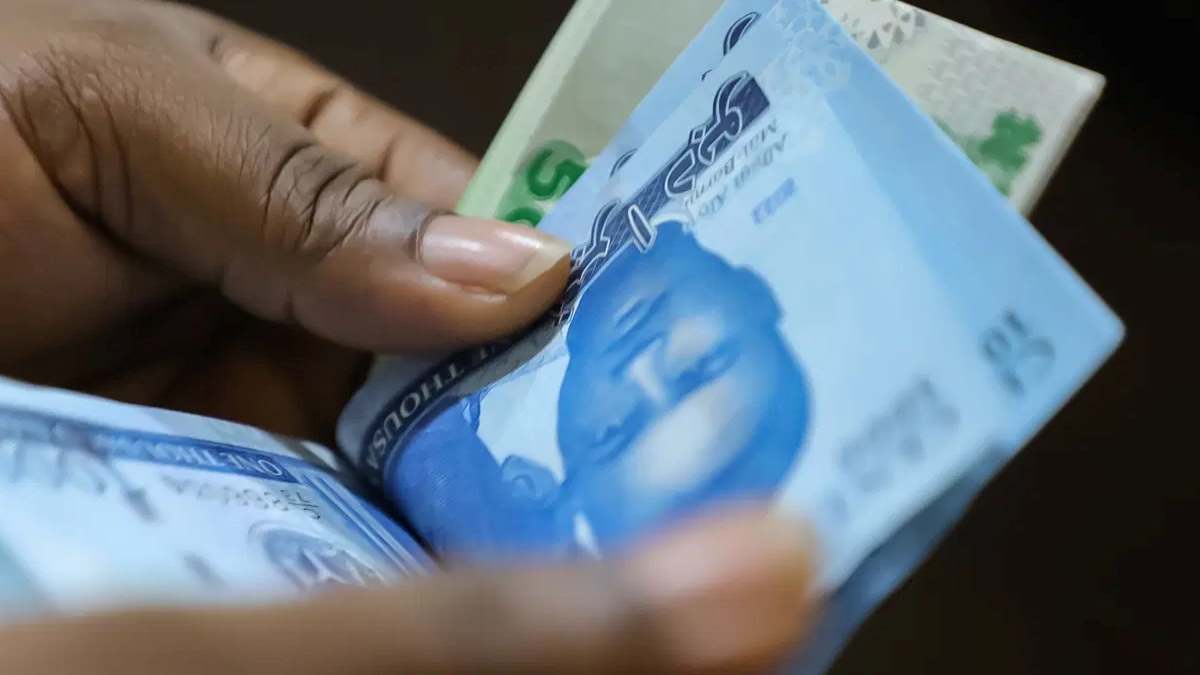
Naira Appreciates to N1,396 Amidst ‘Sell America’ Reactions
The Nigerian local currency, the naira, broke the FX rate barrier at the official window, trading below N1,400 per dollar since reforms amidst ‘sell America’ global reactions.
The local currency sustained its latest uptrend against the US dollar despite lower FX support from the Central Bank of Nigeria (CBN) in recent times.
The US dollar is beaten to a pulp across forex markets, with the US dollar index trading at its lowest in four years as markets continue to react to President Donald Trump’s trade policies, which triggered sell American debt papers and pushed yields upward.
Broadstreet analysts told MarketForces Africa that the outlook is positive for the naira as the market anticipates an influx of foreign portfolio investments in the debt capital market, supported by elevated yield on naira assets.
With sell pressure in the US Treasury, the Nigerian market will be the top portfolio investors’ destination in the first half of 2026 in the absence of a U.S. trade policy reversal that put dollar index under significant pressure.
On Thursday, the naira sustained its appreciation across both exchange channels, rising 0.25% to ₦1,396.99/$ at the CBN window and strengthening 1.06% to ₦1,454/$ in the parallel market, reflecting improved currency sentiment across both the regulated official segment and the informal foreign exchange market.
The crisis of confidence in the US Dollar has gathered pace, with the US Dollar Index hitting a four-year low. Analysts at CFD trading platforms Capital.com said the markets are responding to US President Donald Trump’s policymaking, reigniting the so-called “sell America” trade.
Fundamentally, the on and off tariffs on trading partners, threats against public officials at the Fed, hair-brained fiscal policy, and overall capriciousness in trade policy, foreign policy, and economic policy have pushed market participants over the edge, the platform said.
The “sell America” and “de-dollarization” trade was compounded after President Trump said he wasn’t worried about the drop in the Dollar.
“One thing that often reassures market participants is that Trump has proven himself sensitive to market signals – it’s the bedrock of the so-called ‘Trump Always Chicken Out’ (TACO) trade.
“The fact that the US President hasn’t gotten the signal yet suggests that he is not in the mindset to reverse course and fix the underlying issues”, the platform said.
Meanwhile, Nigeria’s gross external reserves reached $46.11 billion as of 28 January 2026, reflecting an addition of $47.80 million day-on-day amidst uncertainties in the global commodity market.
Global Oil prices climbed about 3% to a five-month high on Thursday on rising concerns that global supplies could be disrupted if the U.S. decides to attack Iran, one of the biggest crude producers in OPEC.
Brent crude jumped 4.49% or $3.16, hovering around $70.53 per barrel, while U.S. West Texas Intermediate (WTI) climbed 3.16%, to around $65.21.
Conversely, Gold prices dropped over 4% on Thursday but recovered slightly over the course of the day as investors took profit after a record high, yet prices remained on course for their best month since the 1980s amid heightened economic and geopolitical uncertainty.
Spot gold price declined 127bps to $5,331.83/oz, while U.S. gold futures gained 99bps, hovering around $5,393.29/oz. Analysts expect markets to trade mixed to cautious, with safe-haven demand supporting gold amid a weak dollar and uncertain oil price direction
US, Nigeria Sign Commercial, Investment Partnership to Deepen Trade Ties
