

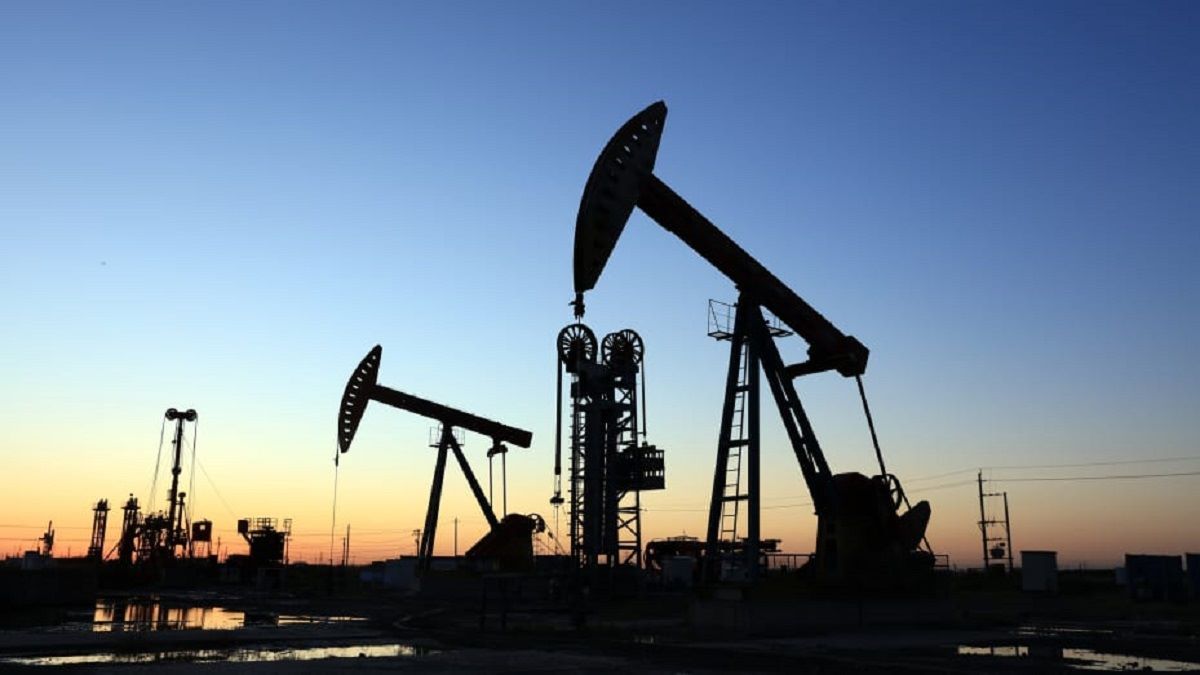
Oil Prices Steady as Markets Weigh U.S Tariff ‘Weaponisation’
Oil prices steadied in the global commodity market on Tuesday after sharp fluctuations following renewed tariff weaponisation by the U.S. government seeking control of Greenland. Price stabilised as new data revealed robust economic indicators from China, indicating a likely rise in crude imports from Beijing.
President Donald Trump of the United States has, in an official capacity, utilised the prospect of increased tariffs as a tool to intimidate European nations, the UK, and other critics of his actions on various fronts.
In reaction, the dollar index declined on Tuesday as trading partners mull significant economic retaliation as pressure over the annexation of Greenland to the U.S. heats up trade relations.
Brent crude traded at $63.59 per barrel, up around 0.03% from the previous close of $63.57. US benchmark West Texas Intermediate (WTI) was at $59.38 per barrel, up about 0.05% compared with $59.35 in the prior session.
The world’s second-largest economy, China’s economy grew 5% in 2025, meeting the government’s annual growth target despite weak domestic demand, deflationary pressures, and a prolonged downturn in the property sector.
According to data from the National Bureau of Statistics, China’s gross domestic product exceeded 140 trillion yuan ($20 trillion) for the first time. While December retail sales rose just 0.9% year-on-year, below expectations, industrial output increased 5.2%, beating forecasts.
Energy indicators also pointed to robust activity. China’s refinery throughput and crude oil output reached record highs in 2025, highlighting the world’s second-largest oil consumer’s continued importance for global oil demand.
Markets remained on edge after Trump’s comments threatening higher tariffs on several major European economies unless an agreement is reached over Greenland.
Trump said on Saturday that Washington would impose 10% tariffs on goods from Denmark, Norway, Sweden, France, Germany, the UK, the Netherlands, and Finland from Feb. 1, rising to 25% in June, unless a deal is struck for what he called the “complete and total purchase of Greenland” by the US.
International credit rating agency Fitch Ratings said on Monday that a US threat to impose tariffs on European allies over their opposition to Washington’s push to acquire Greenland has increased geopolitical risks in Europe.
Oil prices are now balancing signs of resilient Chinese demand against rising geopolitical and trade-related risks. #Oil Prices Steady as Markets Weigh U.S Tariff ‘Weaponisation’ Nigerian Top 5 Banks’ Valuation Increases to N12 Trillion
