

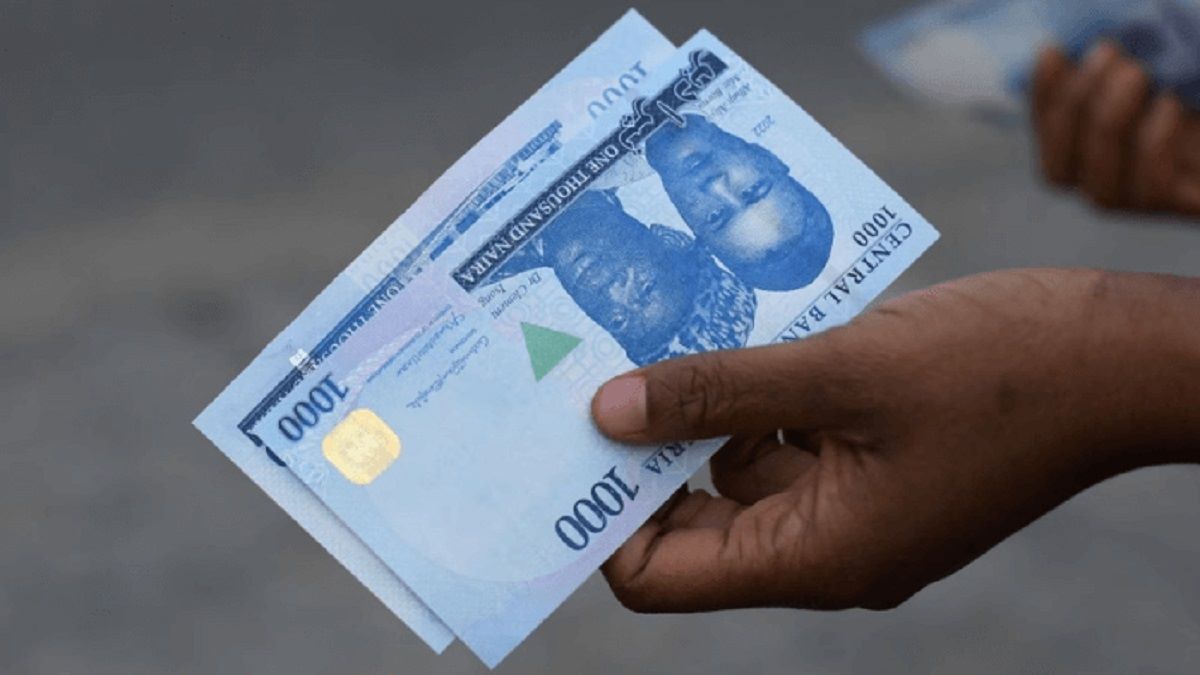
Naira Weakens as Forex Market Dollar Supply Tightens
The Nigerian naira fell to N1,346.7945 in the official foreign exchange market amid a sustained liquidity shortfall and heightened demand for hard currencies.
The foreign exchange market faced renewed pressure as the US Dollar Index (DXY) strengthened amid shifting global market dynamics.
US Dollar supply from foreign portfolio investors, non-bank corporate and other sources, including the Central Bank, fell below the level needed to drive local currency appreciation.
Investors weighed the rebound in crude oil prices against concerns that a slowdown in artificial intelligence-related investment could undermine US economic growth prospects.
At the official foreign exchange window, the naira depreciated marginally by 0.04% week-on-week (WoW) to close at N1,346.79/$, up from N1,346.26/$ the previous week.
Pressure was more evident in the parallel market, where sustained demand for the greenback, partly driven by seasonal foreign exchange requirements, weighed on the local currency. Consequently, the naira depreciated 1.79% to an average of N1,394/$ from N1,369/$ the previous week.
In the international oil market, crude prices fell sharply, with Brent crude briefly touching $90 per barrel on Friday, marking its steepest weekly loss since mid-April, as hopes of a diplomatic breakthrough in the Middle East prompted traders to unwind some of the geopolitical premium.
Brent crude traded at $97.46 per barrel, while WTI stood at $90.14 per barrel. Nigeria’s Bonny Light crude also corrected sharply, down 10.45% to $106.90 per barrel from $119.37 per barrel the previous week.
Analysts at Cowry Asset Management Limited said that if the decline in domestic crude benchmarks continues, it could moderate near-term foreign exchange inflows.
Meanwhile, the country’s gross foreign exchange reserves declined marginally by 0.16% to $55.13 billion from $55.22 billion in the previous week.
“We expect the naira to trade within a relatively stable band, supported by continued CBN interventions and efforts to maintain liquidity at the official foreign exchange window.
However, sustained demand for foreign currency, seasonal payment obligations, and US dollar movements could limit any near-term appreciation. Crude oil prices and the pace of foreign exchange inflows will also remain key determinants of currency stability”, Cowry Asset Limited said.
The U.S. dollar index jumped on Friday and was on pace for its biggest daily percentage gain in seven weeks as it extended gains after a stronger-than-expected U.S. payrolls report.
The dollar index, which measures the greenback against a basket of six major currencies, surged 0.63% to 102.12, while the euro tumbled 0.55% to $1.1157. The dollar was on track for its biggest daily percentage gain since September 16, while the euro was on pace for its biggest one-day decline since October 7.
Expectations that the Fed would hike next month had fallen as U.S. equities plummeted, with the S&P 500 wiping out about $3 trillion in market value while the Nasdaq suffered its biggest one-day percentage drop in 19 months on fears that tougher government regulations on the AI buildout after the U.S. midterm elections would stunt economic growth.
CBN Raises N2.9trn as Investors Oversubscribe OMO Bills Offering
